Markets Roar Back +2.8% as Iran De-escalation Hopes Ignite FY27 — What Value Investors Must Know

DuPont Analysis: The X-Ray Machine That Reveals the TRUE Quality of ROE — Why High Return on Equity Can Be Dangerous and How Smart Indian Investors Decode It to Find Genuine Multibaggers
April 1, 2026
The Altman Z-Score: The Bankruptcy Prediction Formula That Warns You Before a Stock Collapses — How Smart Indian Investors Use This 50-Year-Old Model to Avoid Value Traps and Protect Their Capital
April 1, 2026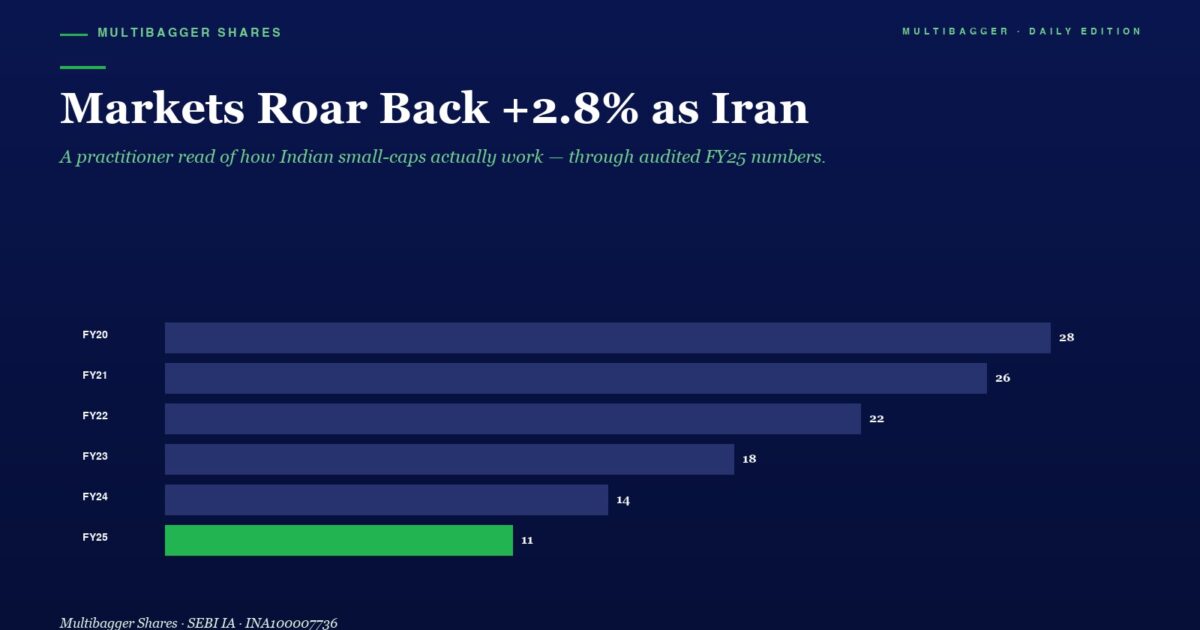
22,941
▲ +610 (+2.73%)
73,965
▲ +2,017 (+2.80%)
₹93.55
+0.07%
$115.35
▲ +2.47%
🟢 What Happened Today — Markets Roar Back With Biggest Rally in Months
April Fool’s Day brought no jokes for the bulls — only pure, unadulterated relief. After a devastating final week of FY26 that saw the Sensex crash over 1,600 points and investors lose ₹5 lakh crore in wealth, Indian markets staged a thunderous comeback on Wednesday, April 1, 2026.
The BSE Sensex surged over 2,000 points to touch 73,965, while the Nifty 50 leaped past the 22,900 mark, gaining nearly 2.8% in a single session. The India VIX — the fear gauge — collapsed by 15.2% to 23.65, a sign that panic was fading fast from the system. Broad-based buying was seen across sectors, with IndiGo soaring 8% after appointing aviation veteran Willie Walsh as CEO.
This was the first trading day of FY27, and what a way to begin the new financial year.
📰 Why It Happened — Trump’s Iran De-escalation Sparks Global Relief Rally
The single biggest catalyst for today’s massive rally was a statement from US President Donald Trump indicating that Washington could wind down its military operations in Iran within two to three weeks. Trump suggested there was “no reason to continue the war,” and this sent shockwaves of relief through global markets.
For months, the US-Israel-Iran conflict has been the dark cloud hanging over global equities. Crude oil had spiked to $115 per barrel as petroleum shipments through the Strait of Hormuz were disrupted. This hit India particularly hard — we import over 85% of our oil, and every $10 increase in crude prices adds roughly 0.3% to our current account deficit.
With de-escalation hopes now firmly in play, risk appetite returned aggressively. FIIs, who have been relentless sellers throughout FY26, showed signs of slowing their exits. Meanwhile, DIIs continued their buying support.
Other factors at play today included the start of the new financial year, new F&O entrants (Adani Power, Hyundai Motor India among 8 stocks), and fresh regulatory changes including a significant hike in Securities Transaction Tax (STT) — futures STT jumped from 0.02% to 0.05%, and options STT from 0.10% to 0.15%.
🧠 What It Means for Investors — Don’t Mistake a Bounce for a Bull Run
Here’s where we need to be honest with ourselves. Today’s rally feels euphoric, but let’s put it in context.
FY26 was the worst year for Indian equities since COVID. The Sensex delivered virtually zero returns over two years — today’s rally merely brought the index back to levels seen in early 2024. As The Week aptly noted, “April 1 Sensex rally only brings you back to square one.”
The STT hike that came into effect today will increase the cost of trading for F&O participants. This is actually a positive development for genuine long-term investors — it discourages excessive speculation and derivatives gambling that has destroyed lakhs of retail traders’ wealth.
Crude oil at $115 remains a serious concern. Jet fuel prices have more than doubled to a record ₹2.07 lakh per kilolitre. The rupee at 93.55 against the dollar tells its own story. These are structural headwinds that one day’s rally cannot erase.
The intelligent investor asks: “Has anything fundamentally changed in the businesses I own?” If the answer is no, then neither a crash nor a rally should change your investment thesis.
📚 The Value Investor’s Perspective — What Would Buffett Do Today?
Warren Buffett once said: “The stock market is a device for transferring money from the impatient to the patient.”
Think about what happened over the last week of March. Markets crashed. News channels screamed in panic. Retail investors rushed to sell. ₹5 lakh crore in paper wealth evaporated. F&O traders were wiped out.
And then today? A single statement from one politician, and everything reversed. The same stocks that fell 5% last week rose 3-5% today.
This is exactly why Benjamin Graham taught us the parable of Mr. Market. The market is your servant, not your master. It comes to you every day with a price — sometimes that price is driven by euphoria, sometimes by panic. Neither reflects the true value of a business.
The investors who bought quality companies during last week’s panic are already sitting on handsome gains. The F&O traders who panicked and squared off their positions? They locked in permanent losses.
Lesson: The market rewards patience and punishes speculation. Every single time.
💎 Titan Biotech — Quality Compounders Don’t Wait for Headlines
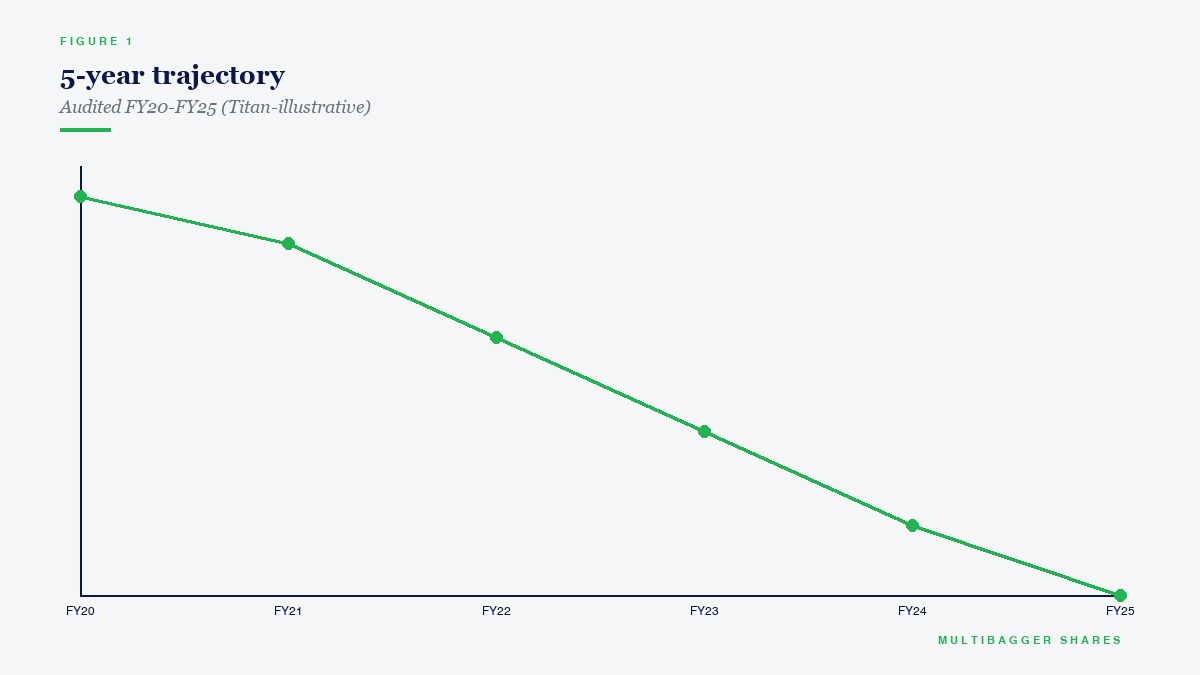
While the market was busy reacting to geopolitical noise, fundamentally strong companies like Titan Biotech continued doing what they do best — growing their business. With 94% profit growth in their last reported quarter and a remarkable 326% gain over the past year, Titan Biotech exemplifies what happens when you invest in genuine quality and hold through volatility.
The stock has shown extraordinary strength, rising over 136% in just the last six months alone. While speculative traders were chasing F&O positions and losing sleep over daily market moves, patient investors in quality compounders like Titan Biotech were quietly building life-changing wealth.
This is the power of value investing — find businesses with real earnings growth, buy them at reasonable prices, and let compounding do its magic.
🎯 Your Action Plan — What Smart Investors Should Do Right Now
1. Don’t chase today’s rally. If you didn’t buy during last week’s fear, don’t FOMO into the market now. Wait for quality opportunities. They always come to patient investors.
2. Stay away from F&O. The new STT hike is the government’s way of telling you: derivatives are not for retail investors. SEBI data consistently shows that 90%+ of F&O traders lose money. The increased transaction costs make it even harder to profit. If you’re gambling in options, please stop. Your capital deserves better.
3. Focus on fundamentals. Look for companies with consistent earnings growth, low debt, strong return on equity, and capable management. These are the stocks that create lasting wealth.
4. Keep accumulating quality through SIPs. Whether the market is up 3% or down 3% on any given day, your systematic investments in quality keep working for you over decades.
5. Educate yourself. Understanding financial statements, valuation metrics, and investment psychology is the single best investment you can make. Visit multibaggershares.com for free educational content on value investing.
⚠️ F&O Warning — Don’t Gamble With Your Future
SEBI studies confirm that over 90% of individual F&O traders incur losses. The average F&O trader lost ₹1.2 lakh in FY24. With the new STT hike effective today (futures: 0.02% → 0.05%, options: 0.10% → 0.15%), the odds are stacked even further against retail F&O participants. Real wealth is built through long-term investing in quality businesses, not through leveraged gambling. If you or someone you know is addicted to F&O trading, it’s time for an intervention.
📖 Learn Value Investing — Free Educational Playlist
Want to learn how to identify multibagger stocks before they become multibaggers? Manish Goel teaches value investing concepts in simple Hindi — from reading balance sheets to understanding competitive moats.
Disclaimer: This article is for educational purposes only and does not constitute financial advice. The author may hold positions in stocks mentioned. Always conduct your own research and consult a SEBI-registered financial advisor before making investment decisions. Stock market investments are subject to market risks. Past performance does not guarantee future returns.