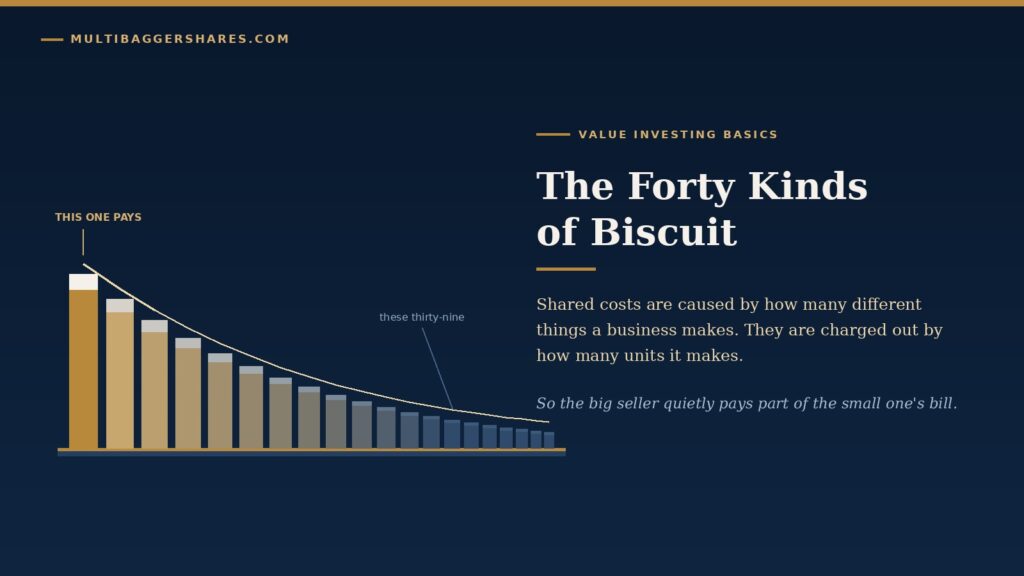
FII and DII Flows: How Institutional Money Moves the Indian Stock Market — Why Understanding These Flows Gives You an Unfair Advantage as a Value Investor

Indian Market Pulse
April 3, 2026
How to Read a Balance Sheet Like a Pro: The Foundation Skill That Separates Successful Indian Investors from Gamblers — A Complete Guide with Real Examples
April 3, 2026
April 3, 2026
(Friday)
Introduction: The Two Giant Hands That Move Indian Markets Every Single Day
If you’ve ever watched the Indian stock market swing wildly — Sensex dropping 800 points one day, rallying 1,200 points the next — and wondered who is actually moving these markets, the answer is simpler than you think. Two massive forces dominate the daily price action of the Indian stock market: FIIs (Foreign Institutional Investors) and DIIs (Domestic Institutional Investors).
As of April 2, 2026, the Sensex closed at 73,319.55 and the Nifty 50 at 22,713.10. On that very day, FIIs recorded net selling of ₹9,931 crores, while DIIs stepped in with net buying of ₹7,208 crores. This single data point tells a powerful story — and if you understand how to read it, you’ll have an unfair advantage over 95% of retail investors who simply react to headlines.
Today, we’re going to break down exactly what FII and DII flows mean, why they matter, how to track them, and most importantly, how smart value investors use this data to make better investment decisions. This is essential knowledge for anyone serious about building wealth in the Indian stock market.
What Are FIIs and DIIs? Understanding the Institutional Giants
Foreign Institutional Investors (FIIs / FPIs)
FIIs — now officially called FPIs (Foreign Portfolio Investors) by SEBI — are large international investment entities that invest in Indian securities. These include global hedge funds, sovereign wealth funds, pension funds from countries like Norway, Canada, and Japan, and massive asset management firms like BlackRock, Vanguard, and Goldman Sachs Asset Management.
FIIs collectively hold approximately 16-18% of the total market capitalization of Indian listed companies. When they buy, they bring in fresh foreign capital (dollars converted to rupees), which can push both stock prices and the rupee higher. When they sell, they take capital out (rupees converted back to dollars), which pressures both stock prices and the rupee.
Key fact: FII flows are heavily influenced by global factors — US Federal Reserve interest rate decisions, the US dollar index (DXY), crude oil prices, global risk appetite, and geopolitical tensions. When the US raises rates or the dollar strengthens, money tends to flow OUT of emerging markets like India and INTO the US. This is why Trump’s tariff threats or Iran tensions can trigger massive FII selling in India — even if Indian fundamentals are perfectly fine.
Domestic Institutional Investors (DIIs)
DIIs are Indian institutional investors that deploy domestic savings into the stock market. The major categories include:
1. Mutual Funds: The largest DII category. With monthly SIP (Systematic Investment Plan) flows now exceeding ₹25,000 crores per month, Indian mutual funds have become a powerful force. Every month, crores of Indian retail investors contribute to SIPs, and this money gets deployed into stocks — providing a steady buying force regardless of what FIIs do.
2. Insurance Companies: LIC (Life Insurance Corporation of India) alone manages over ₹40 lakh crore in assets. Private insurers like HDFC Life, SBI Life, and ICICI Prudential also deploy significant capital into equities.
3. Pension Funds: EPFO (Employees’ Provident Fund Organisation), NPS (National Pension System), and state pension funds are increasingly allocating to equities, providing long-term structural buying support.
4. Banks: Indian banks also invest their treasury surplus in equities, though their allocation is typically smaller than mutual funds and insurance companies.
The FII-DII Tug of War: Why It Matters for Your Portfolio
The relationship between FII and DII flows creates four distinct market scenarios that every smart investor must understand:
Scenario 1: FIIs Buying + DIIs Buying = Strong Rally. When both institutional giants are buying simultaneously, markets tend to surge. This happened during the 2020-2021 post-COVID rally when both FIIs and DIIs poured money into Indian markets, taking Sensex from 25,000 to 60,000+.
Scenario 2: FIIs Selling + DIIs Buying = Range-Bound or Mild Correction. This is the MOST COMMON scenario in recent years, and it’s exactly what we’re seeing now (April 2, 2026: FII selling ₹9,931 Cr vs DII buying ₹7,208 Cr). DII buying cushions the fall, but FII selling prevents a strong rally. Markets churn sideways or correct mildly. This is often the BEST time for value investors to accumulate quality stocks — because prices are suppressed but fundamentals remain strong.
Scenario 3: FIIs Buying + DIIs Selling = Cautious Rally. This typically happens when global conditions improve (dollar weakens, oil falls) but domestic sentiment is still cautious. The rally tends to be concentrated in large-caps and FII-favorite sectors like IT, financials, and consumer staples.
Scenario 4: FIIs Selling + DIIs Selling = Sharp Correction. This is the rarest and most dangerous scenario — a genuine panic where even domestic institutions lose confidence. It happened briefly during COVID March 2020 and during the 2008 global financial crisis. These are once-in-a-decade buying opportunities for true value investors.
How to Track FII and DII Data — Your Daily Intelligence Toolkit
Every serious investor should check FII/DII data as part of their daily routine. Here’s where to find it:
1. NSE Website (Primary Source): Visit nseindia.com/reports/fii-dii for the official daily data. This shows net buying/selling by FIIs and DIIs in the cash segment, updated by 6:30 PM every trading day.
2. NSDL/CDSL Websites: For FII-specific data broken down by individual FPI names and their holdings.
3. Trendlyne: Visit trendlyne.com for beautifully visualized historical FII/DII data with charts showing monthly and yearly trends.
4. Moneycontrol / Economic Times: These financial portals provide daily FII/DII roundups with expert commentary.
The key metrics to track are: Daily net buy/sell (tells you today’s action), Monthly cumulative flows (tells you the broader trend), and Yearly cumulative flows (tells you the structural story).
The DII Revolution: Why India’s Market Structure Has Fundamentally Changed
Here’s something most investors don’t fully appreciate: India’s market structure has undergone a tectonic shift over the past decade, and it changes everything about how you should interpret FII flows.
Before 2015, FIIs were the undisputed kings of the Indian market. When they sold, there was no one to absorb the selling pressure. Markets would crash 20-30% purely on FII outflows. Retail investors were at the mercy of foreign capital.
Then came the SIP revolution. Monthly SIP flows grew from ₹3,000 crores in 2016 to over ₹25,000 crores in 2025-2026. This created a structural domestic buying floor that didn’t exist before. Now, even when FIIs sell aggressively (as they have in recent months, pulling out over ₹1.5 lakh crores in FY26), DIIs can absorb a significant portion of the selling pressure.
This is why the current market correction has been relatively orderly despite massive FII outflows. The Sensex hasn’t crashed 30% — it’s corrected maybe 10-12% from its highs — because DII money keeps flowing in through SIPs. This structural change is permanent and makes India a far more resilient market than it was a decade ago.
Real-World Application: The Titan Biotech Example
Let’s apply this FII/DII framework to a real stock. Consider Titan Biotech Ltd (BSE: 524717), currently trading at ₹504 with a market cap of ₹2,082 crores, ROCE of 16.9%, and ROE of 15.0%. This is a quality small-cap compounder with zero debt, consistently growing revenues, and strong fundamentals.
Now, here’s the critical insight: FIIs typically don’t invest in micro-cap and small-cap stocks like Titan Biotech. Their mandate and ticket sizes are too large for stocks with limited liquidity. This means that when FIIs sell and create market-wide fear, quality small-caps like Titan Biotech often get dragged down purely due to sentiment — not because of any fundamental deterioration.
Smart value investors understand this distinction. When FII selling creates a general market panic and drags down quality small-caps with strong fundamentals, it creates a golden opportunity to accumulate shares at depressed prices. The fundamentals haven’t changed — only the sentiment has. And sentiment is temporary, while business quality is permanent.
This is exactly the kind of insight that separates wealth creators from the crowd. While headline-watching investors panic at “FIIs sell ₹10,000 crores!” the educated value investor asks: “Are the businesses I own still fundamentally strong? Has anything changed in their competitive position, profitability, or growth trajectory?” If the answer is no, the FII selling is a gift, not a threat.
Five Rules for Using FII/DII Data as a Value Investor
Rule 1: Never make buy/sell decisions based on a single day’s FII/DII data. One day of heavy FII selling might just be portfolio rebalancing or a global risk-off event. Look at the cumulative monthly and quarterly trend before drawing conclusions.
Rule 2: Sustained FII selling + Strong DII buying = Accumulation Zone. When this pattern persists for weeks or months, it usually means global factors are temporarily negative but Indian fundamentals are strong. This is historically one of the best times to buy quality stocks.
Rule 3: Watch the WHY behind FII selling. Is it India-specific (negative policy change, regulatory shock) or global (dollar strength, US rate hikes, geopolitical tension)? Global-driven FII selling tends to reverse faster because India’s domestic story remains intact.
Rule 4: DII flows have structural support that FII flows don’t. SIP money flows in every month regardless of market conditions. This creates a predictable buying force. FII flows are far more volatile and sentiment-driven. Over the long term, the structural DII buying provides a floor for Indian markets.
Rule 5: Small-cap quality stocks are LEAST affected by FII flows in reality, MOST affected by FII-driven sentiment. This mismatch between reality and sentiment is where the biggest opportunities lie for patient value investors.
The Anti-F&O Message: Why Understanding Flows Beats Trading Them
Here’s an important warning: some traders try to “trade” FII/DII data by buying when DIIs buy and selling when FIIs sell, often using F&O (Futures and Options) for leverage. This is a recipe for disaster.
According to SEBI’s own study, 9 out of 10 individual traders in the equity Futures & Options segment incurred net losses. F&O trading is essentially gambling. The house (brokers, exchanges, and institutional market makers) always wins in the long run.
The correct use of FII/DII data is not for short-term trading but for understanding market context. It helps you answer: “Is the market selling off because of fundamentals or because of foreign capital movements?” If it’s the latter, you have a green light to accumulate quality businesses at temporarily depressed prices.
Focus on quality stock picking and long-term value investing. Learn from our complete Value Investing Course that teaches you the fundamental skills every successful investor needs.
Key Takeaways
1. FII and DII flows are the two dominant institutional forces that move Indian stock markets on a daily basis. Understanding them gives you context that most retail investors lack.
2. The DII revolution (driven by SIP flows exceeding ₹25,000 crores/month) has fundamentally changed India’s market structure, making it far more resilient to FII selling than it was a decade ago.
3. The most profitable opportunities for value investors often arise when FIIs are selling aggressively (due to global factors) while DIIs are buying (reflecting domestic confidence). This pattern creates temporary price dislocations in quality stocks.
4. Quality small-cap stocks like Titan Biotech (₹504, ROCE 16.9%, zero debt) are typically unaffected by FII flows in reality but get dragged down by FII-driven market sentiment — creating golden buying windows for patient investors.
5. Use FII/DII data for understanding market context, NOT for F&O trading. 9 out of 10 F&O traders lose money. Build wealth through quality stock picking and long-term holding.
SEBI Disclaimer: 9 out of 10 individual traders in the equity Futures & Options segment incurred net losses according to a SEBI study. F&O trading is essentially gambling. Focus on quality stock picking and long-term value investing instead.
Disclaimer: This article is for educational purposes only and does not constitute financial advice. The author may hold positions in stocks mentioned. Always conduct your own research and consult a SEBI-registered financial advisor before making investment decisions. Stock market investments are subject to market risks. Past performance does not guarantee future returns.
📢 Join Our Telegram Channel
Get daily value investing lessons, stock analysis — delivered straight to your phone!
✈️ Join @longtermequityy on Telegram
🔔 Free • No spam • Value investing insights daily