Geopolitical Crises and Your Portfolio: Why Smart Value Investors Buy When Others Panic — Lessons from India’s Market History

Ram Navami Special: Markets Closed Today — What Yesterday’s 1,200-Point Sensex Rally Means for Your Portfolio
March 26, 2026
The Art of Scuttlebutt: Philip Fisher’s 15-Point Checklist for Finding India’s Next Multibagger Stocks
March 26, 2026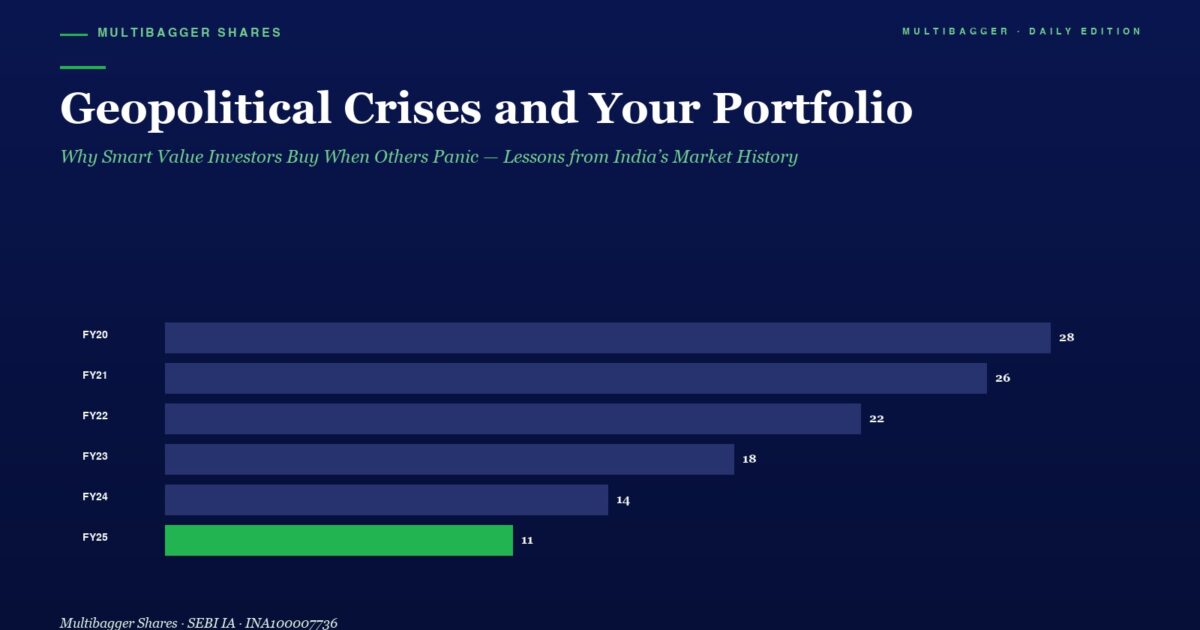
March 26, 2026
(Thursday)
When the World Panics, the Wise Invest
As I write this on March 26, 2026 — Ram Navami — Indian stock markets are closed for the festival. But what a week it has been! The Sensex surged an incredible 1,205 points yesterday (March 25) to close at 75,273, while the Nifty 50 jumped 1.72% to 23,306. This dramatic rally came after weeks of geopolitical turmoil surrounding the US-Iran tensions, which had pushed Indian markets down nearly 9% this month alone.
This pattern — panic selling followed by sharp recoveries — is one of the most powerful and repeated lessons in stock market history. And yet, most investors get it completely wrong. They sell at the bottom and buy at the top. Today, let’s understand why geopolitical crises are actually golden opportunities for disciplined value investors.
The Historical Pattern: Every Crisis is a Buying Opportunity
Let’s look at how Indian markets have responded to major geopolitical events over the past 25 years:
Kargil War (1999): The Sensex fell approximately 15% during the conflict. Investors who bought during the fear saw the index rally over 50% in the following 18 months as the IT boom took hold.
9/11 Attacks (2001): Indian markets crashed 10% in a single week. Within 6 months, markets had not only recovered but were trending higher. Patient investors were handsomely rewarded.
Global Financial Crisis (2008-09): The Nifty crashed from 6,300 to below 2,600 — a devastating 59% fall. But those who had the courage to buy quality stocks at the bottom saw 300-400% returns over the next 5 years.
COVID-19 Crash (2020): The Nifty dropped from 12,300 to 7,500 in just one month. Investors who bought quality companies during March 2020 saw their portfolios double or triple within 2 years.
Russia-Ukraine War (2022): Markets corrected 10-15%. The recovery took just a few months for quality stocks.
The lesson? Every single geopolitical crisis in India’s stock market history has been a buying opportunity for long-term investors. Not a single one led to permanent loss of capital for investors who held quality stocks.
Why Geopolitical Events Don’t Destroy Quality Businesses
Think about it this way — when there’s tension between nations, does that change the fundamental earning power of a well-run Indian company? Does a company with high Return on Capital Employed (ROCE), zero debt, and growing revenues suddenly become a bad business because of a war thousands of kilometers away?
Absolutely not.
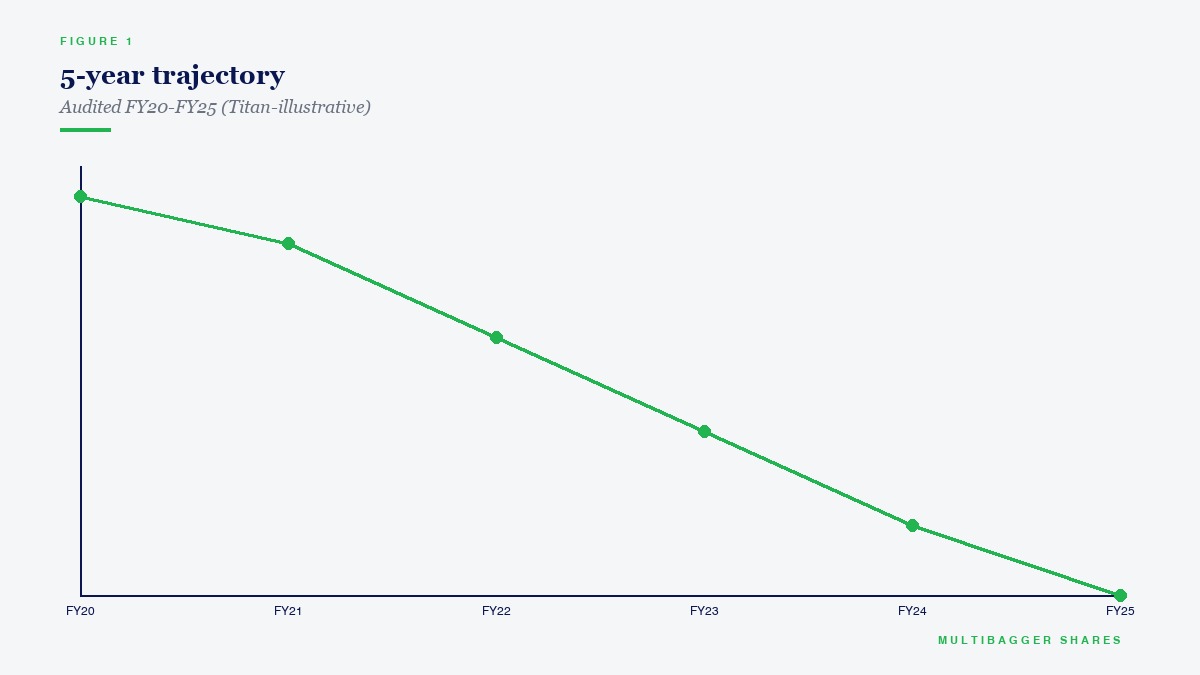
Take Titan Biotech Ltd (BSE: 524717) as a perfect example. Currently trading around ₹368 with a stunning 326% return over the past year, this company’s fundamentals — high ROCE, low debt, honest management, and growing earnings — remain rock-solid regardless of what happens in the Middle East or anywhere else. The company’s products are in demand, its management is executing well, and its competitive advantages are intact.
Geopolitical events create temporary price dislocations, not permanent value destruction. The stock price is what you pay; the business value is what you get. When fear drives prices down while business value remains unchanged, that’s the very definition of an opportunity.
The Real Danger: Emotional Decision-Making
The biggest risk during geopolitical crises isn’t the crisis itself — it’s your own emotional reaction. Here’s what typically happens:
Phase 1 — Fear: Headlines scream about war, conflict, and market crashes. FII outflows accelerate (this month alone, nearly $11.37 billion has flowed out of Indian markets). Retail investors panic and sell their quality holdings at depressed prices.
Phase 2 — Capitulation: Markets hit their lowest point. The most fearful investors have already sold. Trading volumes dry up. News channels predict further doom.
Phase 3 — Recovery: Quietly, smart money starts buying. Yesterday’s 1,205-point Sensex rally is a perfect example. The recovery often happens so fast that those who sold during the panic miss the best days entirely.
Phase 4 — Regret: Investors who sold at the bottom watch helplessly as markets recover. They swear they’ll be brave next time. But when the next crisis comes, the cycle repeats.
Studies show that missing just the 10 best trading days over a 20-year period can cut your returns by more than 50%. And when do the best days typically occur? Right in the middle of the worst crises — exactly when most investors are sitting on the sidelines.
Warren Buffett’s Golden Rule: Be Greedy When Others Are Fearful
Warren Buffett, the greatest value investor of all time, has built his fortune by doing exactly this. During the 2008 financial crisis, while everyone else was selling, Buffett invested $5 billion in Goldman Sachs and $3 billion in General Electric. These investments generated billions in profits.
His famous quote says it all: “Be fearful when others are greedy, and greedy when others are fearful.”
In the Indian context, legendary investors like Rakesh Jhunjhunwala built their fortunes by buying aggressively during market crashes. His famous investment in Titan Company during the 2003 market lows turned a few crores into thousands of crores over two decades.
A Practical Framework: What to Do During Geopolitical Crises
Here’s your actionable playbook for the current US-Iran situation and any future geopolitical crisis:
Step 1: Stay Invested. Do NOT sell your quality holdings. If you own companies with high ROCE, low debt, honest management, and growing earnings, hold them with conviction. Their business value hasn’t changed.
Step 2: Make a Shopping List. Identify 5-10 high-quality companies you’ve been wanting to buy but found too expensive. Market corrections bring them to reasonable prices. Companies like Titan Biotech Ltd that demonstrate consistent fundamental strength are exactly what you should be looking for.
Step 3: Deploy Cash Gradually. Don’t try to time the exact bottom. Instead, use a Systematic Investment Plan (SIP) approach — invest a fixed amount every week during the correction. This ensures you buy more at lower prices and less at higher prices.
Step 4: Avoid F&O Trading. This is CRITICAL. During volatile times, the temptation to trade Futures & Options increases dramatically. Don’t fall for it. SEBI’s own data confirms that over 90% of F&O traders lose money. Geopolitical volatility makes these losses even worse. F&O during a crisis is pure gambling — it destroys wealth, it doesn’t create it.
Step 5: Turn Off the Noise. Stop watching business news channels 24/7 during crises. They profit from your fear. Instead, read annual reports, study company fundamentals, and make rational decisions based on data, not emotions.
The Current Opportunity: March 2026
Right now, we’re living through exactly this pattern. The US-Iran tensions have created fear. FIIs have pulled out billions. Markets fell 9% this month. The rupee hit record lows.
But look at what happened yesterday — a massive 1,205-point Sensex rally the moment de-escalation hopes emerged. The broader market rallied even harder, with midcap and smallcap indices surging 2.3% and 2.6% respectively.
India’s long-term growth story remains intact. Our GDP is growing, corporate earnings are expanding, and quality companies continue to execute their business plans regardless of what’s happening in the Middle East. The demographic dividend, digital transformation, and manufacturing push (Make in India) are structural themes that no geopolitical event can derail.
Real Wealth is Built During Crises, Not Bull Markets
Here’s a powerful truth that most investors don’t understand: the returns you earn in a bull market are largely determined by the prices you paid during the bear market or correction before it.
If you buy quality stocks at depressed prices during a geopolitical crisis, you’re essentially locking in higher future returns. The lower your purchase price for a fundamentally strong company, the higher your eventual returns will be.
This is exactly what happened with Titan Biotech Ltd. Investors who identified its quality fundamentals and bought at lower levels have been rewarded with a 326% return in just one year. The company’s strong ROCE, minimal debt, and consistent earnings growth powered this return — not any market timing or trading strategy.
The Bottom Line: Crisis = Opportunity for the Prepared Investor
Every geopolitical crisis in Indian market history has been temporary. Markets always recover. Quality businesses always grow. Patient investors always win.
The current US-Iran tensions will eventually resolve — just as every previous crisis has. When they do, markets will rally (as we saw yesterday with the 1,205-point surge). The question is: will you be positioned to benefit, or will you be watching from the sidelines because you sold in panic?
My advice: Stay invested in quality. Buy more if you can. Avoid F&O gambling. Think long-term. That’s the path to real wealth creation.
Remember — in the stock market, patience is not just a virtue, it’s a strategy. And during geopolitical crises, it’s the most profitable strategy of all.
Start Your Value Investing Education Journey: Watch our complete free course on value investing: Value Investing Course Playlist
Disclaimer: This article is for educational purposes only and does not constitute financial advice. The author may hold positions in stocks mentioned. Always conduct your own research and consult a SEBI-registered financial advisor before making investment decisions. Stock market investments are subject to market risks. Past performance does not guarantee future returns.
📢 Join Our Telegram Channel
Get daily value investing lessons, stock analysis — delivered straight to your phone!
✈️ Join @longtermequityy on Telegram
🔔 Free • No spam • Value investing insights daily