
Pledged Shares: The Hidden Time Bomb in Indian Stocks — Why Promoter Pledging Destroys Shareholder Wealth and How to Protect Your Portfolio

The Dunning-Kruger Effect in Investing: Why Beginners Think They Are Stock Market Experts and How It Destroys Wealth
March 28, 2026
Demerger Value Unlocking: How Corporate Splits Create Hidden Multibagger Opportunities in India — A Complete Guide for Smart Investors
March 28, 2026
March 28, 2026
(Saturday)
Introduction: The Silent Wealth Destroyer Hiding in Plain Sight
Every Indian investor has heard the classic warnings — avoid companies with too much debt, stay away from low-margin businesses, beware of promoters with questionable track records. But there is one corporate governance red flag that even experienced investors routinely ignore, and it has destroyed more shareholder wealth in India than almost any other single factor.
That red flag is promoter share pledging.
When promoters pledge their shares — essentially using their ownership stake as collateral for personal or business loans — they create a hidden time bomb inside the company’s stock. In good times, nobody notices. But when markets fall, pledged shares trigger a devastating chain reaction that can wipe out 50–90% of a stock’s value in a matter of weeks.
As of March 2026, with the Sensex at 73,583 and Nifty at 22,819 after five consecutive weeks of decline, this topic could not be more timely. In falling markets, pledged share traps get activated — and investors who didn’t do their homework pay the heaviest price.
In this comprehensive guide, we will explain exactly what pledged shares are, why they are so dangerous, how to check pledging data before investing, and how smart value investors use this information to protect their capital and find genuinely safe multibagger opportunities.
What Are Pledged Shares? Understanding the Mechanism
In simple terms, when a company’s promoter needs to raise money — for personal expenses, to fund another business venture, or to finance the company itself — they can go to a bank or financial institution and use their shares in the company as collateral (security) for a loan. This is called pledging of shares.
Think of it like a home loan. When you take a home loan, the bank holds your property as security. If you stop paying the EMI, the bank can sell your house to recover its money. Similarly, when promoters pledge their shares, the lender holds those shares as security. If the promoter cannot repay the loan or if the share price falls below a certain level (called the trigger price or margin call level), the lender has the right to sell those shares in the open market to recover its money.
This is where the danger begins.
The Deadly Chain Reaction: How Pledged Shares Destroy Wealth
Here is the step-by-step mechanism of how pledged shares create a death spiral for any stock:
Step 1: The Pledge. The promoter pledges, say, 60% of their holding to borrow ₹500 crore from a bank. At the time of pledging, the share price is ₹1,000.
Step 2: The Market Falls. Due to broader market weakness or company-specific bad news, the stock drops to ₹700. The value of the collateral has fallen significantly.
Step 3: The Margin Call. The lender now tells the promoter: “Your collateral has lost value. Either deposit more shares, bring more cash, or we will sell your shares to protect ourselves.” This is the dreaded margin call.
Step 4: Forced Selling. If the promoter cannot arrange additional collateral (which is often the case, since they pledged shares precisely because they needed money), the lender starts selling the pledged shares in the open market.
Step 5: The Death Spiral. When large blocks of promoter shares hit the market, the stock price falls further. This triggers more margin calls on the remaining pledged shares. More forced selling follows. The stock price crashes even more. This vicious cycle can destroy a stock in days.
Step 6: Retail Investors Get Crushed. By the time ordinary investors understand what is happening, the stock has already fallen 50–80%. Panic selling by retail investors accelerates the decline even further.
Real-World Disasters: Indian Companies Destroyed by Pledged Shares
India has seen numerous high-profile cases where pledged shares triggered catastrophic wealth destruction:
Satyam Computer Services (2009): Before the famous accounting fraud was revealed, promoter Ramalinga Raju had pledged a massive portion of his holdings. When the share price began falling, the forced selling of pledged shares contributed to the stock’s collapse from over ₹500 to under ₹10. Investors lost over ₹14,000 crore.
Zee Entertainment (2019): The Essel Group had pledged a significant portion of its Zee Entertainment shares. When the market corrected, margin calls triggered forced selling, and the stock fell from ₹500+ to below ₹200 in months. The Subhash Chandra family lost control of the company they founded.
Future Group (2020): Kishore Biyani’s Future Group had extensive pledging across multiple group companies. When COVID-19 crashed the market, the forced selling of pledged shares accelerated the collapse. Future Retail fell from ₹400+ to single digits.
Reliance ADAG Companies: Anil Ambani’s group companies — Reliance Communications, Reliance Capital, Reliance Infrastructure — had extremely high promoter pledging. As share prices fell, forced selling destroyed billions of rupees in shareholder wealth.
The pattern is always the same: high pledging → market decline → margin call → forced selling → death spiral → retail investors destroyed.
How to Check Promoter Pledging: A Practical Guide
The good news is that SEBI (Securities and Exchange Board of India) requires companies to disclose promoter pledging data every quarter. Here is how you can check:
Method 1: BSE/NSE Website. Go to bseindia.com or nseindia.com, search for the company, and look under “Shareholding Pattern.” The promoter pledging percentage is clearly mentioned.
Method 2: Annual Reports. Every company’s annual report contains a detailed shareholding pattern that shows pledged shares as a percentage of total promoter holding.
Method 3: Financial Portals. Websites like Screener.in, Trendlyne, and Tickertape show promoter pledging data in an easy-to-read format. You can also see the trend — whether pledging is increasing or decreasing over time.
Method 4: SEBI’s EDIFAR/Corporate Filing System. Quarterly shareholding pattern filings are available on SEBI’s website for every listed company.
The Red Flag Thresholds: When to Worry
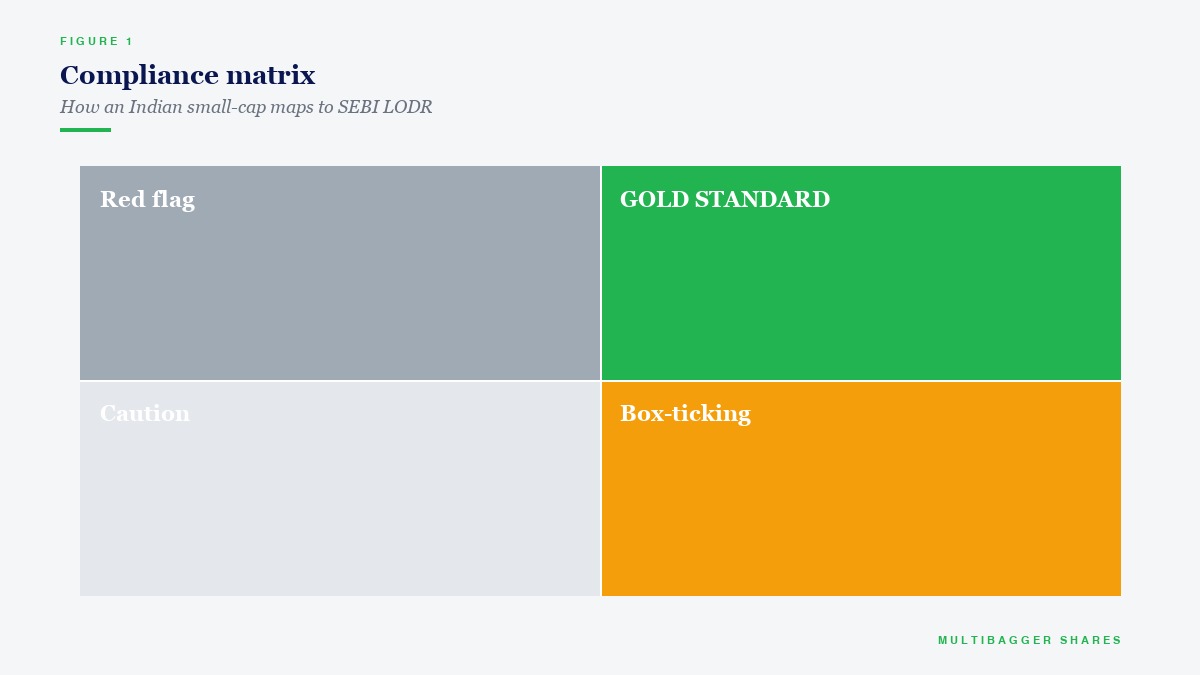
Not all pledging is equally dangerous. Here is a practical framework:
0% Pledging (IDEAL): The gold standard. Zero pledging means the promoter has not used shares as collateral. This is what you want to see. Companies like Titan Biotech Ltd (BSE: 524717), currently trading around ₹368 with a market cap of over ₹1,200 crore, exemplify clean promoter holding with no pledging concerns — one of the many reasons it has delivered spectacular returns from ₹55 to current levels.
1–10% Pledging (LOW RISK): Minor pledging, often temporary for business expansion. Monitor quarterly to ensure it’s not increasing.
10–30% Pledging (CAUTION): Moderate risk zone. Dig deeper — why are promoters pledging? Is it for the company’s business or personal use? Is the trend increasing?
30–50% Pledging (HIGH RISK): Serious red flag. Avoid investing unless you have very strong conviction about the business and the pledging is clearly temporary.
50%+ Pledging (DANGER ZONE): Extremely dangerous. A market correction of just 20–30% could trigger the death spiral described above. In almost all cases, investors should avoid such stocks completely.
Why Do Promoters Pledge Shares? Understanding Their Motivations
Understanding why promoters pledge helps you assess the risk level:
Business Expansion: Sometimes promoters pledge shares to fund the company’s own expansion. While not ideal, this is the least dangerous reason — if the expansion succeeds, the pledging is temporary.
New Ventures: Promoters may pledge shares to fund entirely new business ventures outside the listed company. This is riskier because if the new venture fails, the listed company’s shareholders bear the consequences.
Personal Loans: The most concerning reason. When promoters pledge shares for personal luxury spending, it signals that they view the company as a personal ATM rather than a fiduciary trust.
Group Company Bailouts: In Indian business groups, promoters often pledge shares of a profitable company to bail out a struggling sister company. This is extremely dangerous for minority shareholders.
Debt Refinancing: When a promoter is already in financial difficulty and pledges shares to refinance existing debt, it’s often a sign of impending trouble.
SEBI’s Stance on Pledged Shares: Regulatory Framework
SEBI has progressively tightened regulations around pledged shares:
Mandatory Disclosure: Promoters must disclose pledging and any changes within specific timeframes. Any creation or release of pledged shares must be reported to the stock exchanges immediately.
Minimum Public Shareholding: SEBI’s 25% minimum public shareholding rule means promoters cannot hold more than 75%. High pledging on top of high promoter holding creates concentrated risk.
Encumbrance Reporting: SEBI now requires reporting of all forms of encumbrance — not just formal pledges but also any arrangement that creates a lien on shares.
Despite these regulations, the core risk remains: pledged shares are a structural vulnerability that no amount of disclosure can eliminate.
The Smart Value Investor’s Pledging Checklist
Before investing in any Indian stock, add these pledging-related checks to your analysis:
Check 1: What percentage of promoter holding is pledged? (Prefer 0%, accept up to 10% with caution)
Check 2: Is the pledging trend increasing or decreasing over the last 4–8 quarters? (Increasing pledging is a major warning sign)
Check 3: Why are shares pledged? (Business expansion is acceptable; personal loans or group company bailouts are not)
Check 4: What is the promoter’s overall financial health? (Do they have other assets and income sources, or is the listed company their only significant asset?)
Check 5: How leveraged is the company itself? (High company debt + high promoter pledging = double jeopardy)
Check 6: What is the stock’s liquidity? (Low-liquidity stocks with high pledging are the most dangerous because even small forced selling can crash the price)
Titan Biotech: A Case Study in Clean Governance
This is precisely why quality-focused investors gravitate toward companies with clean corporate governance. Titan Biotech Ltd (BSE: 524717), currently trading around ₹368, exemplifies what a well-governed small-cap looks like. The promoters have maintained skin in the game without resorting to pledging — their confidence is demonstrated through genuine ownership, not leveraged bets.
When Manish Goel first identified Titan Biotech at around ₹55, one of the key factors was exactly this kind of clean corporate governance. The stock has since delivered over 180% returns, rewarding investors who prioritized governance quality over superficial metrics.
Compare this with companies where promoters pledge 40–60% of their holdings. Even if the business fundamentals look attractive on paper, the pledging risk creates a structural vulnerability that can destroy years of compounding in a single margin call event.
The F&O Gambling Connection: Double Destruction
Here is an important connection that few people discuss. SEBI’s own data shows that approximately 90% of individual traders in F&O (Futures & Options) lose money. Many retail investors who get burned by pledged share traps then turn to F&O trading to “recover” their losses — and end up losing even more.
The smart approach is the opposite: avoid pledged share traps in the first place, invest in quality companies with clean governance, and let compounding do the work over years and decades. This is the core philosophy of value investing — and it is what separates wealth creators from wealth destroyers.
Practical Screening Strategy: Building a Pledge-Free Portfolio
Here is a simple screening strategy any investor can follow:
Step 1: Start with companies that have zero promoter pledging. In India, there are hundreds of quality companies with zero pledging — you are not limiting yourself by applying this filter.
Step 2: Combine the zero-pledging filter with other quality metrics — high ROE, low debt, consistent earnings growth, and strong cash flows.
Step 3: Check the pledging trend over the last 2–3 years. Some companies may show zero pledging today but had significant pledging in the recent past. Understand why it was reduced — was it genuine deleveraging or just temporary?
Step 4: For companies where you find minor pledging (1–10%), read the management discussion in annual reports to understand the reason. If the explanation is credible and the trend is decreasing, it may still be an acceptable investment.
Step 5: Set up alerts for pledging changes. Many financial portals allow you to track changes in promoter pledging. An unexpected increase in pledging should trigger an immediate review of your investment thesis.
Conclusion: Don’t Let Hidden Risks Destroy Your Wealth
Pledged shares represent one of the most underappreciated risks in Indian equity investing. The mechanism is simple, the data is publicly available, and the consequences are devastating — yet most retail investors never check this metric before investing.
In a market environment like today — with Sensex at 73,583 after five consecutive weeks of decline and global uncertainty weighing on sentiment — companies with high promoter pledging are sitting on a ticking time bomb. One more leg of decline could trigger the death spiral that has destroyed wealth in case after case.
The value investor’s approach is clear: prioritize clean corporate governance, insist on zero or minimal pledging, combine this with fundamental quality metrics, and invest for the long term. Companies like Titan Biotech demonstrate that you can find excellent returns without taking on unnecessary pledging risk.
Remember: in investing, what you avoid matters as much as what you buy. Avoiding pledged share traps is one of the simplest and most effective ways to protect your wealth and compound your capital safely over decades.
This is Part 1 of our Corporate Governance series for Indian investors. To continue your value investing education, watch our complete free course:
🎓 Free Value Investing Course Playlist
Disclaimer: This article is for educational purposes only and does not constitute financial advice. The author (Manish Goel) is a SEBI Registered Research Analyst (Registration No. INH100004775) and Multibagger Shares (Multibagger Securities Research & Advisory Pvt. Ltd.) is a SEBI Registered Investment Advisor (Registration No. INA100007736). Multibagger Shares is a SEBI-registered entity. This article is purely educational and should not be construed as a buy/sell recommendation. All stock examples are used for educational illustration only. Investors should conduct their own research and consult a qualified financial advisor before making any investment decisions. Past performance does not guarantee future results.
📢 Join Our Telegram Channel
Get daily value investing lessons, stock analysis & Titan Biotech updates — delivered straight to your phone!
✈️ Join @longtermequityy on Telegram
🔔 Free • No spam • Value investing insights daily