The Lamp-Oil Seller: Why It Matters Whether a Company Thinks It Sells a Product or Meets a Need

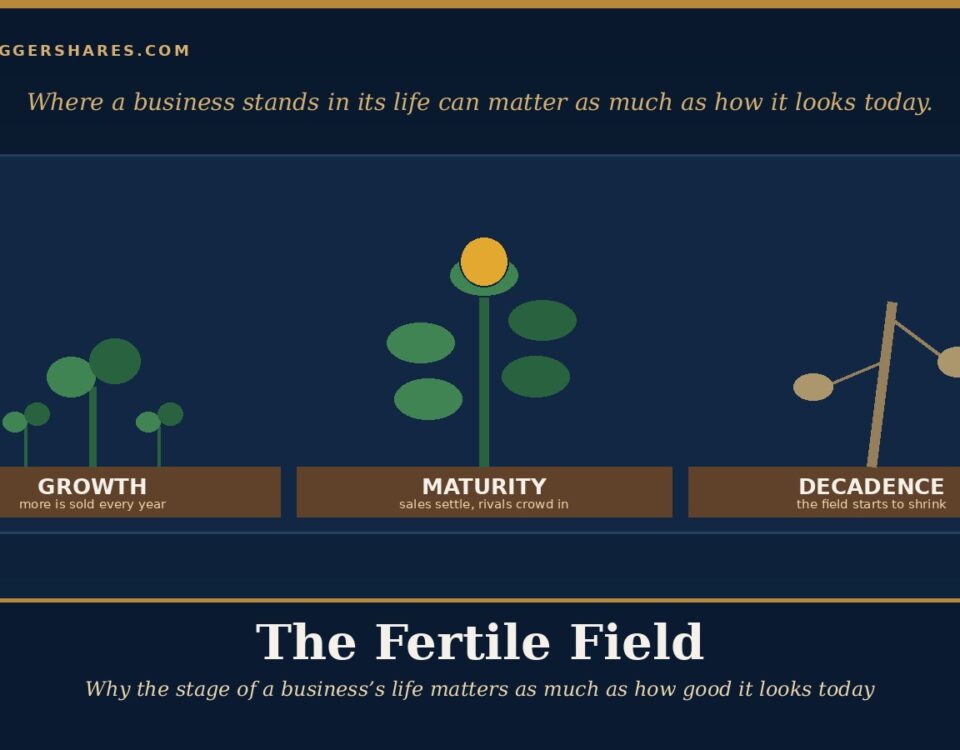
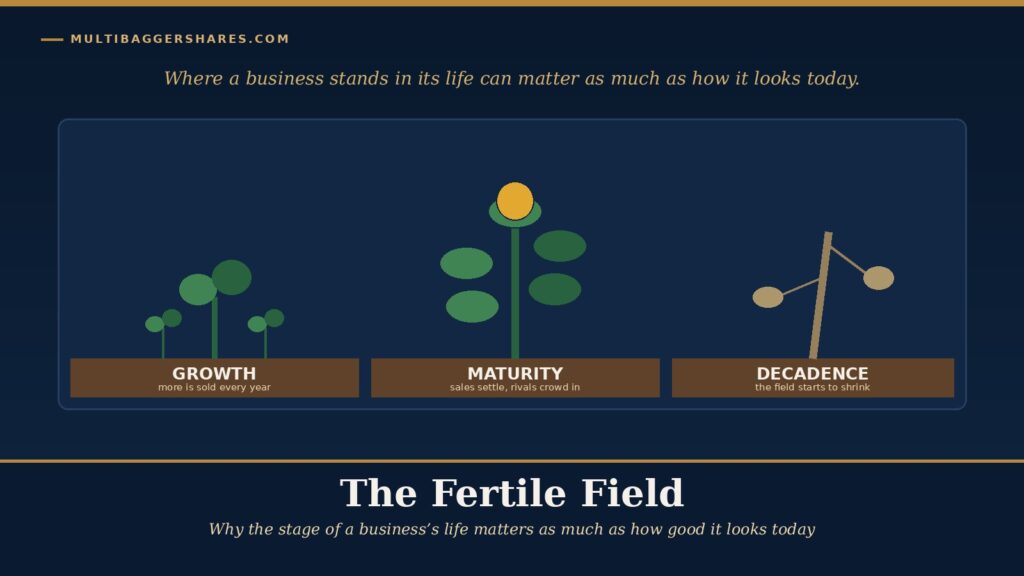
The Fertile Field: Why the Stage of a Business’s Life Matters as Much as How Good It Looks Today
November 7, 2026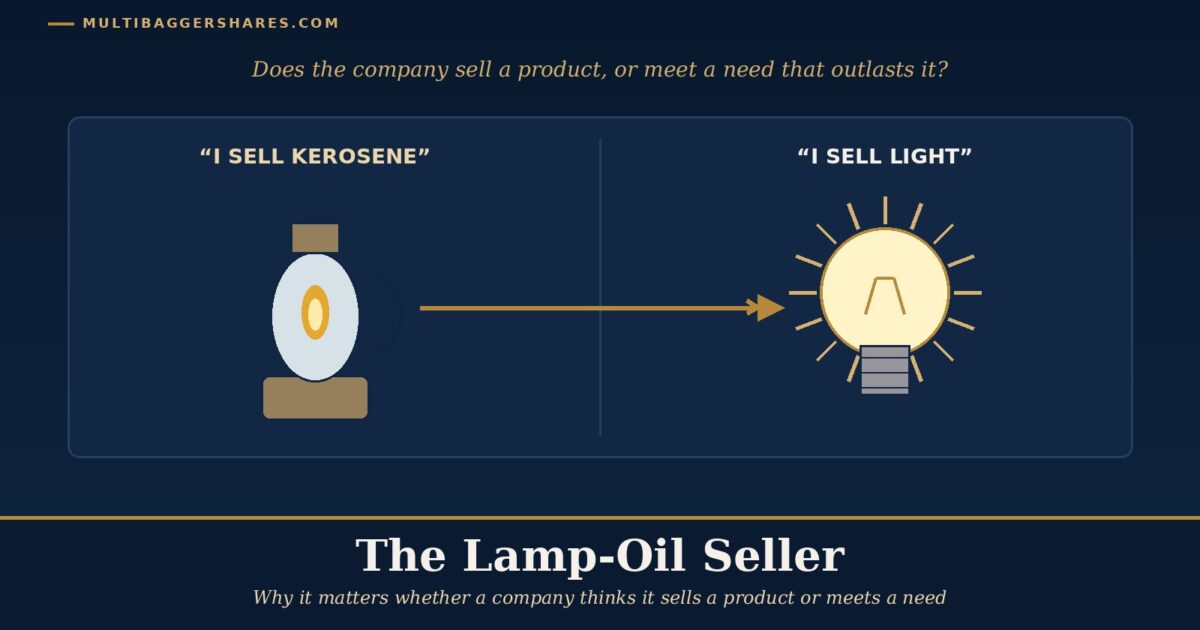
In a village far from the highway, a man called Hari sells kerosene (a thin oil that burns in lamps) from a small shop. Every evening the village comes to him with bottles and tins. For most homes the lamp is the only light after sunset, and Hari is the man who keeps it burning. For years his is the busiest shop on the lane.
Then the electric poles arrive. First one lane gets power, then the next. Hari watches his queue grow shorter. A neighbour asks what he plans to do. Hari shrugs and says, “I sell kerosene. My father sold kerosene. That is my business.” He cuts his price a little, gives away free funnels, and keeps the shop open later. The sales keep sliding all the same.
Across the lane lives another dealer, Gopal. He also began with kerosene. But when someone asks Gopal what he sells, he gives a different answer. “I sell light after dark,” he says. When the poles arrive, he adds torches and batteries. Later he adds LED bulbs (small lights that use very little power). His shop stays busy. The two men started with the same customers and the same lamps. What differed was the sentence each one used to describe his own business.
This lesson is about that sentence. How a company describes what it does can shape what it builds, what it protects and what it fails to notice. It is a way of judging the quality of a business, and it has nothing to do with the price of any share.
What it really means
The idea comes from Theodore Levitt, who was a long-time professor of marketing (the study of how businesses find and keep customers) at Harvard Business School. In 1960 he published an article in the Harvard Business Review called “Marketing Myopia.” Myopia is the medical word for short-sightedness, where nearby things look clear and distant things look blurred. Levitt said many businesses suffer from a kind of short-sightedness. They stare so closely at their own product that they stop seeing the customer’s need behind it.
His best-known example was the railways of the United States. Levitt argued that the industry stopped growing, not because people stopped wanting to travel or send goods, but because the people running it “assumed they were in the railroad business rather than the transportation business.” Their eyes were on the trains. The customers’ eyes were on getting somewhere. When cars, lorries and aeroplanes did that job better, the customers simply went along.
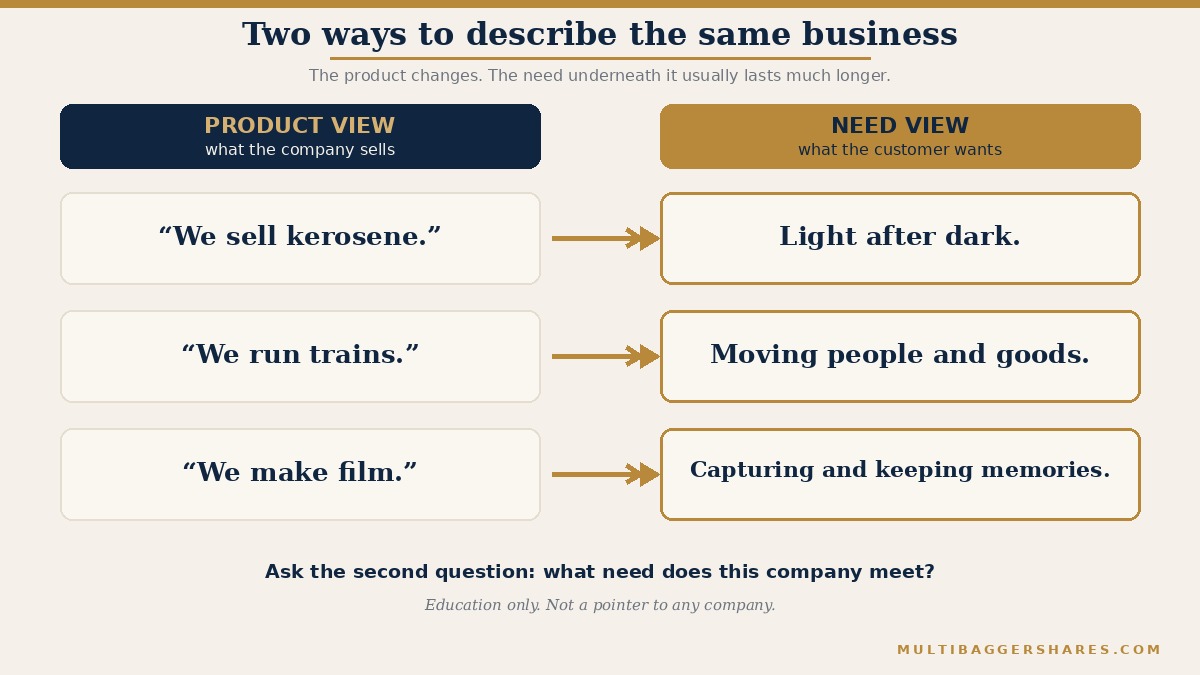
Notice the two ways of describing one company. “We run trains” is about the product. “We move people and goods” is about the need. A product can change, wear out or be replaced. A need usually lasts far longer. People needed light long before kerosene lamps, and they will need it long after today’s bulbs. Levitt’s warning was that a business which ties its identity to the product can end up loyal to something that is slowly being replaced.
You may have heard the line, “People do not want a quarter-inch drill. They want a quarter-inch hole.” It is often credited to Levitt. In fact, a 1947 book on selling credited it to an advertising man named Leo McGivena, and Levitt himself credited McGivena in a later book. The idea was in the air before either of them. It makes the same point in the smallest possible way: the drill is only a means, and the hole is the end.
Be clear about what the idea is not. It does not say a company should chase every new fashion. It does not say that an old product is always doomed. It asks a narrower question: does the company understand the need it serves well enough to notice when a better way of serving it arrives?
Why it works
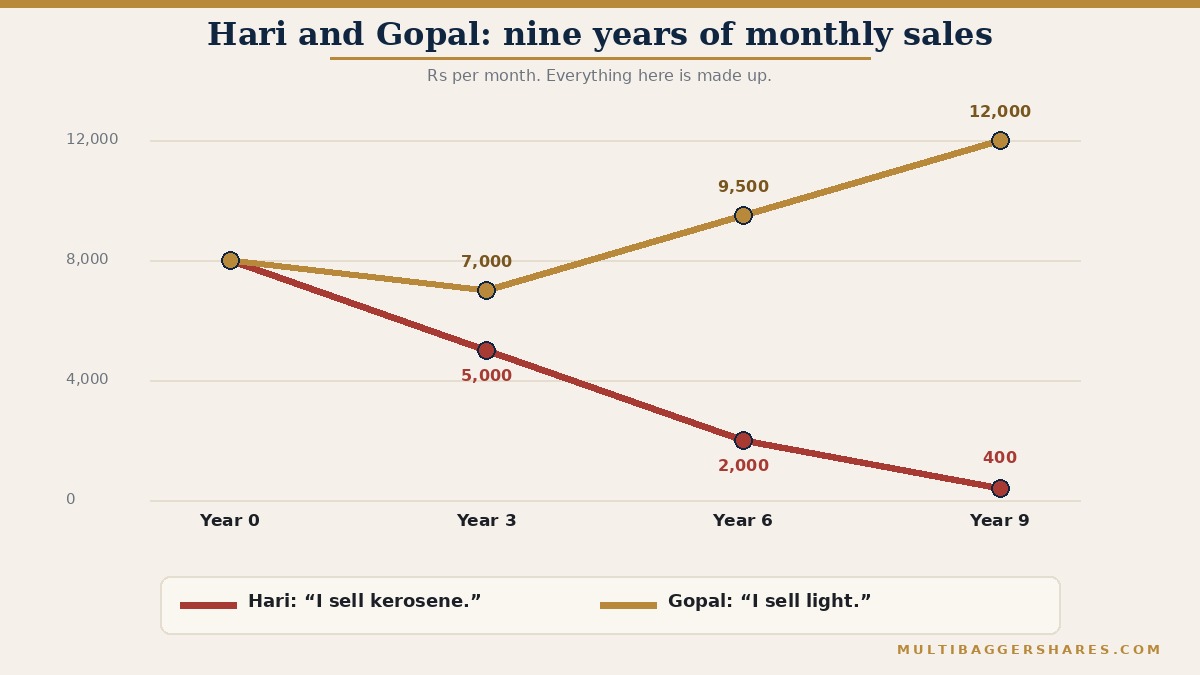
Let us put made-up numbers on the village. Everything here is invented to keep the sums clean. At the start, Hari and Gopal each sell about Rs 8,000 of kerosene a month. Three years later the poles have reached half the village. Hari sells Rs 5,000 a month. Gopal’s kerosene sales have fallen the same way, to about Rs 5,000, but he has added torches and batteries worth Rs 2,000, so his shop sells Rs 7,000 in all.
By year six, most homes have power. Hari is down to Rs 2,000 a month. Gopal’s kerosene is also down to Rs 2,000, but bulbs, batteries and small solar lamps bring in Rs 7,500 more, so his shop sells Rs 9,500. By year nine, Hari sells Rs 400 of kerosene to a handful of faithful customers. Gopal sells only Rs 400 of kerosene too, yet his shop sells Rs 12,000 in all. The two men began at the same point and ended in very different places.
Why did Gopal do better? There are three reasons. First, he kept the customer. The villager who trusted him for light still trusts him when light changes its form. The relationship is often the real asset, and the product is just the thing that happens to be sold through it.
Second, he noticed early. Because Gopal watched the need and not just the oil, the first pole in the first lane was news to him, not a surprise. Third, he spent his spare money on the future. Hari put his savings into a bigger kerosene tank. Gopal put his into stock the village would want next year. Where a business spends its money shows what it believes about itself. Investors call this capital allocation (how a company decides to use the money it has left over).
A simple picture may help. Think of the need as a road and the product as the vehicle. The road stays for a very long time. Vehicles change every few years, from bullock carts to buses, from lamps to bulbs. A shopkeeper who sees himself as the owner of one vehicle is stuck when that vehicle goes out of fashion. A shopkeeper who sees himself as someone who helps people travel down the road can change vehicles and carry on.
Notice that Hari is not lazy and not foolish. Cutting prices and working late hours is what an honest shopkeeper does. The trouble is that he is working harder at the wrong task. A company can be hardworking and honest and still lose ground, if everything it does is aimed at defending a product instead of serving a need.
There is also a human reason. The people inside an old business usually grew up with its product. Their skills, their factory and their pride all belong to it. Letting go feels like letting go of themselves. So a company can see change coming and still not move. This is why the sentence a company uses about itself matters. It shows how easily the company can let go of the old way when the customer has already done so.
A real example or two
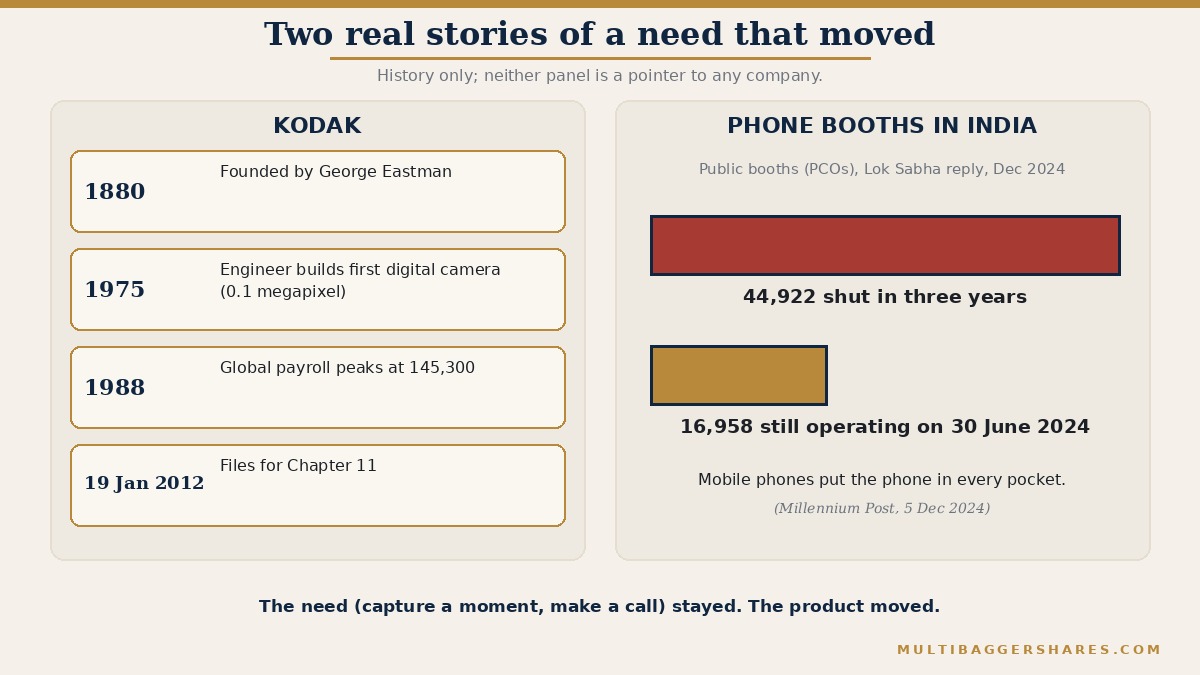
Kodak is the story people tell most often. George Eastman founded it in 1880, and for a century it was one of the best-known names in photography. Its global payroll peaked at 145,300 people in 1988. Yet in 1975 one of its own engineers, Steven Sasson, built the first digital camera, a prototype that took black-and-white pictures at 0.1 megapixels (a tiny fraction of the detail in a modern phone photo). On 19 January 2012, Kodak filed for Chapter 11 (a court-supervised process in the United States for a company that cannot pay its debts).
Be careful not to read too much into this. Why Kodak moved as it did is still debated. One often-told reason is the fear of hurting its very profitable film business. What we can say safely is that the company which built an early digital camera did not become the leader in digital photography. The customer’s real wish, which was to capture a moment and share it, did not go away. It simply moved to phones and screens.
India has its own, much closer example. For many years, small STD and PCO booths (shops with a public phone, where you paid per call) were how millions of families made phone calls. A written reply in the Lok Sabha, reported in December 2024, said that about 44,922 of these booths had shut in the previous three years, and only 16,958 were still operating on 30 June 2024. Mobile phones had put the phone in every pocket.
Think about what that means for two booth owners. One thinks, “I rent out a phone.” The other thinks, “I help people in this neighbourhood with small errands.” The second has more doors to knock on when the first one closes. We cannot say what any individual owner did, and it would be wrong to claim that a clever sentence saves every shop. But it is fair to say that the second owner starts with more choices.
How you can use it
The first use is to ask for the sentence. Before you look at any number, write one plain sentence about the company you are studying: what need does it meet for its customers? Not “it makes cement” but “it helps people build homes and roads.” If you cannot write that sentence, you probably do not understand the business yet. That is a useful finding too. Investors call the area they truly understand their circle of competence (the set of businesses you know well enough to judge).
The second use is to separate the need from the product. Ask which part is lasting and which part could be replaced. Light, travel, safe storage of money, good health and food for the family are lasting needs. The products that serve them change. A business serving a lasting need through a product that is hard to replace is a different case from one serving it through a product that a new invention could make old.
Here is a small test you can try on any business. Finish the sentence, “Customers come to us because they want to…” If the ending describes the company’s product, such as “buy our tea,” you have a product view. If it describes something in the customer’s life, such as “start the morning with something warm,” you have a need view. Many annual reports open with a short description of the business. Read it the way you would listen to a new neighbour introducing himself, and notice what he chooses to say first.
The third use is to watch where the money goes. Read how the company explains its spending in its annual report. Does it build new ways of serving the same customers, or does it mostly spend to protect the old product? Look at what happened the last time a big change arrived. How a company behaved at its last turning point is often better evidence than any statement about the next one.
The fourth use is to be fair to the idea. It can be stretched too far. A company that says “we are in the happiness business” has said nothing useful. Companies have skills, factories and brands that fit some needs and not others. A railway cannot become an airline just by changing its slogan. Sometimes the product is the lasting thing, and a good product that keeps getting better needs no new sentence at all. Use Levitt’s idea as a question, not as a slogan.
So think once more of the two dealers on the lane. Same village, same customers, same lamps. One man’s sentence was, “I sell kerosene.” The other’s was, “I sell light.” When the poles arrived, each man did exactly what his sentence told him to do. When you study a business, listen for the sentence, and then check what the company does when the poles come.
Key takeaways
- A company can describe itself by its product (“we run trains”) or by the need it meets (“we move people and goods”). The second view usually lasts longer, because products change and needs stay.
- Theodore Levitt’s 1960 article “Marketing Myopia” warned that businesses lose ground when they stare at their product and stop watching the customer.
- In the made-up village, two dealers began at Rs 8,000 a month. The one who sold light, not just kerosene, ended at Rs 12,000. The one who defended the product ended at Rs 400.
- Ask for the sentence: what need does this company meet? Then check where it spends its money, and how it behaved at its last big turning point.
- The idea can be stretched too far. Skills and assets still limit what a company can become, so treat it as a question to ask, not as a prediction.
— Manish Goel · multibaggershares.com
Manish Goel is a Chartered Accountant and Principal Officer of Multibagger Securities Research & Advisory Pvt. Ltd. (MSRAPL), a SEBI-registered Investment Adviser, Registration No. INA100007736. This content is published by MSRAPL for education only and is not personalized investment advice.
Disclaimer: This article is published by multibaggershares.com for education and general information only. It is not investment advice, investment research, or a recommendation to buy, sell or hold any security. Any companies named are discussed only as illustrative examples. Markets carry risk; please do your own research or consult a qualified professional before making any investment decision. |