The Notebook of Near Misses: Why a Business That Keeps Its Workers Safe Is Usually a Well-Run Business

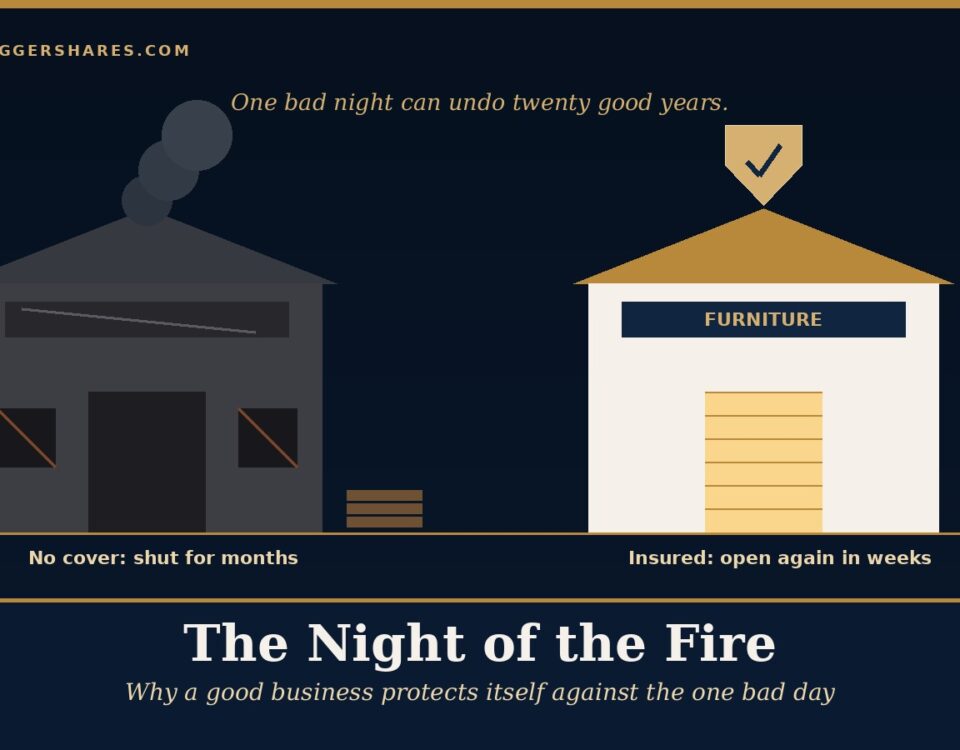
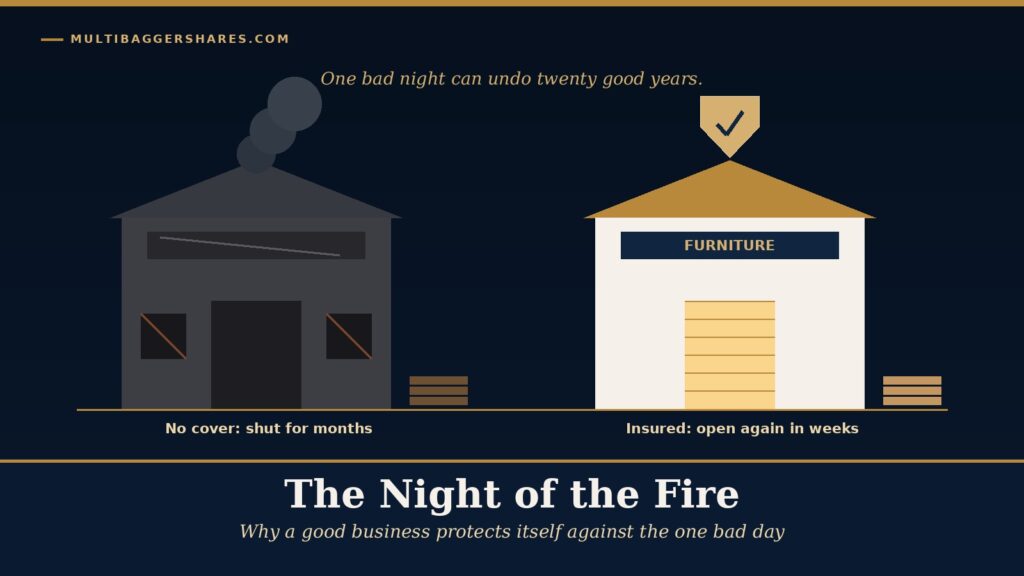
The Night of the Fire: Why a Good Business Protects Itself Against the One Bad Day
November 24, 2026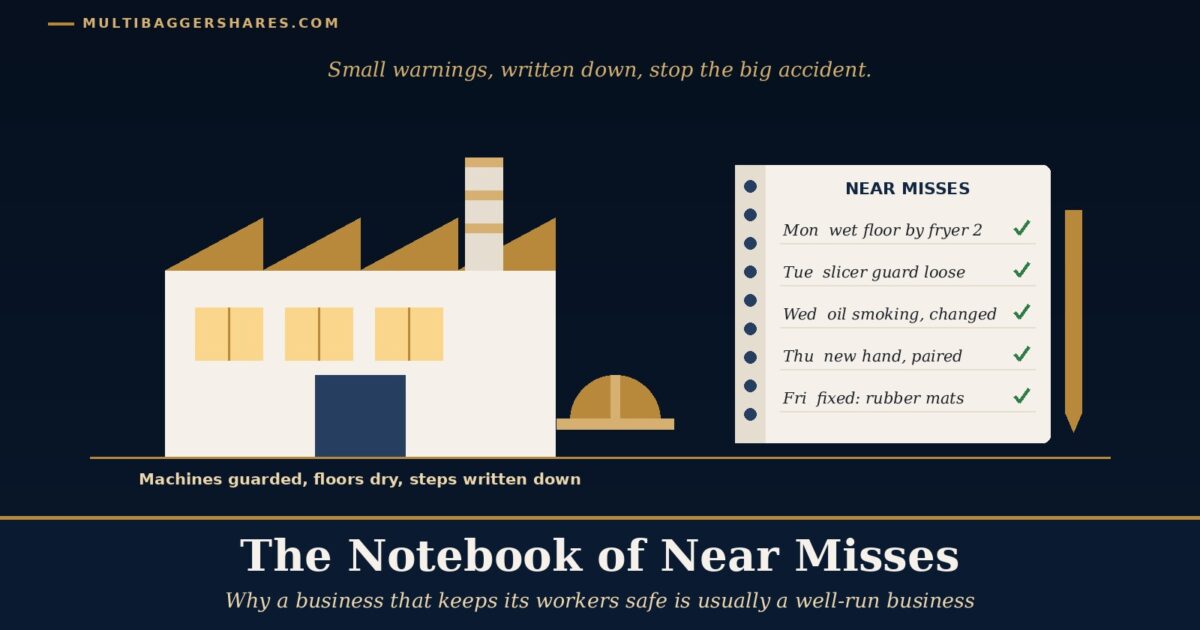
In an industrial estate on the edge of Rajkot, two small namkeen units stand a few lanes apart. Both fry the same crunchy things that fill Indian kitchens and tea-time plates: sev, gathiya, chips and mixtures. Both have about thirty workers, big pans of hot oil, gas burners, slicing machines and floors that turn slippery by noon. Both owners are hard-working and proud of their taste.
Dinesh runs the first unit. He likes speed. When the guard on his potato slicer (the metal cover that keeps fingers away from the blade) made cleaning slow, he had it taken off. Small burns from splashing oil are treated with ointment and forgotten. Nobody writes anything down. When someone slips on the oily floor, Dinesh shrugs and says what many owners say: accidents happen.
Rukhsana runs the second unit. She keeps an ordinary school notebook on a hook near the gate. Every burn, every slip, and every near miss (a moment when someone almost got hurt but did not) goes into it, in a line or two. Every Friday she sits with her two supervisors for fifteen minutes, reads the week’s lines, and picks one thing to fix. Over time the notebook brought rubber mats near the fryers, a rule that oil is changed before it starts to smoke, a guard that opens easily for cleaning, and a rule that every new worker spends a week beside an old hand before working alone.
Three years later the difference was plain. In Dinesh’s unit, a young worker’s hand was badly cut by the unguarded slicer. The line stopped for two days. A trained worker left. An inspector came. A rival quietly picked up the orders Dinesh could not deliver that week. Rukhsana’s unit had its share of small burns, but nobody had been seriously hurt in years.
And here is the surprising part. Rukhsana’s unit was also better at almost everything else. Fewer batches were burnt. Less oil was wasted. Machines broke down less often, because the same Friday habit that found loose guards also found worn belts. Her workers stayed longer, so they got faster and better. When a large retail chain sent a buyer to visit, the buyer took one look at the clean, orderly floor and signed a supply deal. The notebook was never only about safety. It was a habit of noticing small problems before they became big ones.
What it really means
A business’s safety record is simply how often its people get hurt at work, and how badly. It sounds like a sad side-statistic, the kind of thing printed in small type at the back of a report. This lesson says the opposite: how safely a business runs is one of the clearest windows into how well it runs.
A few plain words help. A lost-time injury is an injury bad enough that the worker has to stay away from work for at least a day or a shift. A fatality is a death at work, the worst outcome of all. Large companies often report a number called the LTIFR (lost time injury frequency rate: how many lost-time injuries happen for every one million hours that people work). Think of it like a cricket bowler’s economy rate. One bad over tells you little, but the rate across a whole season tells you a lot about the bowler.
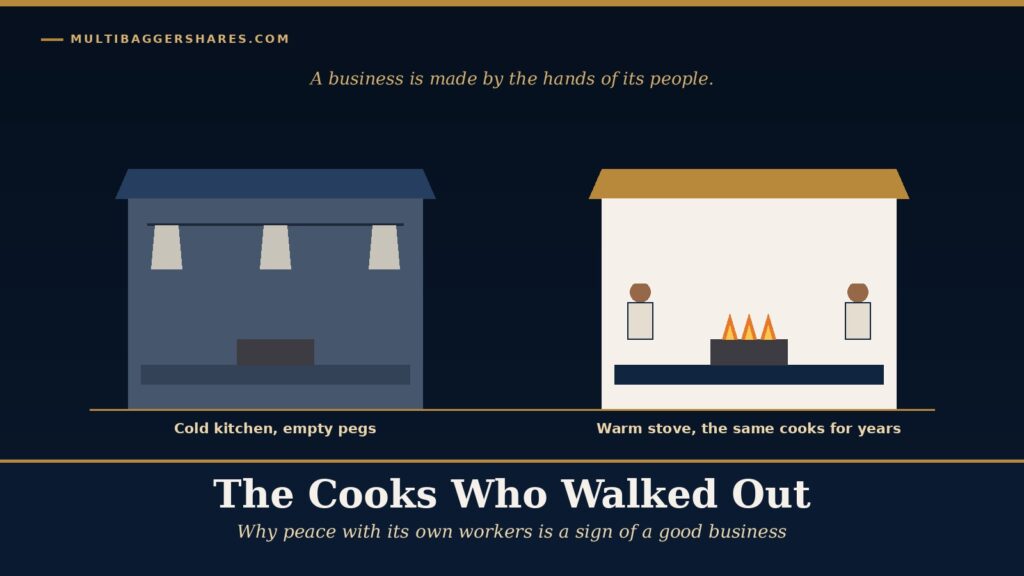
Two earlier lessons on this site sit close to this one, so it helps to draw the line. The Cooks Who Walked Out was about peace and trust between a business and its workers. The Night of the Fire was about insurance, which pays you after something has gone wrong. This lesson is about something earlier still: the daily habits that stop things going wrong in the first place, and what those habits tell an outsider about the people in charge.
Why it works
A good safety record is a quiet sign of a good business for five plain reasons.
First, the same habits run both. A safe factory is usually a tidy one. Machines are maintained on time. Steps are written down and followed. New people are trained properly before they work alone. Those are exactly the habits that also give you fewer defects, less waste and orders delivered on time. A loose machine guard and a loose way of working usually come from the same place.
Second, small signals come before big ones. In 1931 an American insurance official named Herbert Heinrich published a famous study of tens of thousands of accident reports. He suggested that for every serious injury there were about 29 minor ones, and about 300 accidents in which nobody was hurt at all. Think of a monsoon roof. A big leak rarely comes out of nowhere. First there is a damp patch, then a drip in one corner. The owner who fixes the damp patch never sees the flood.
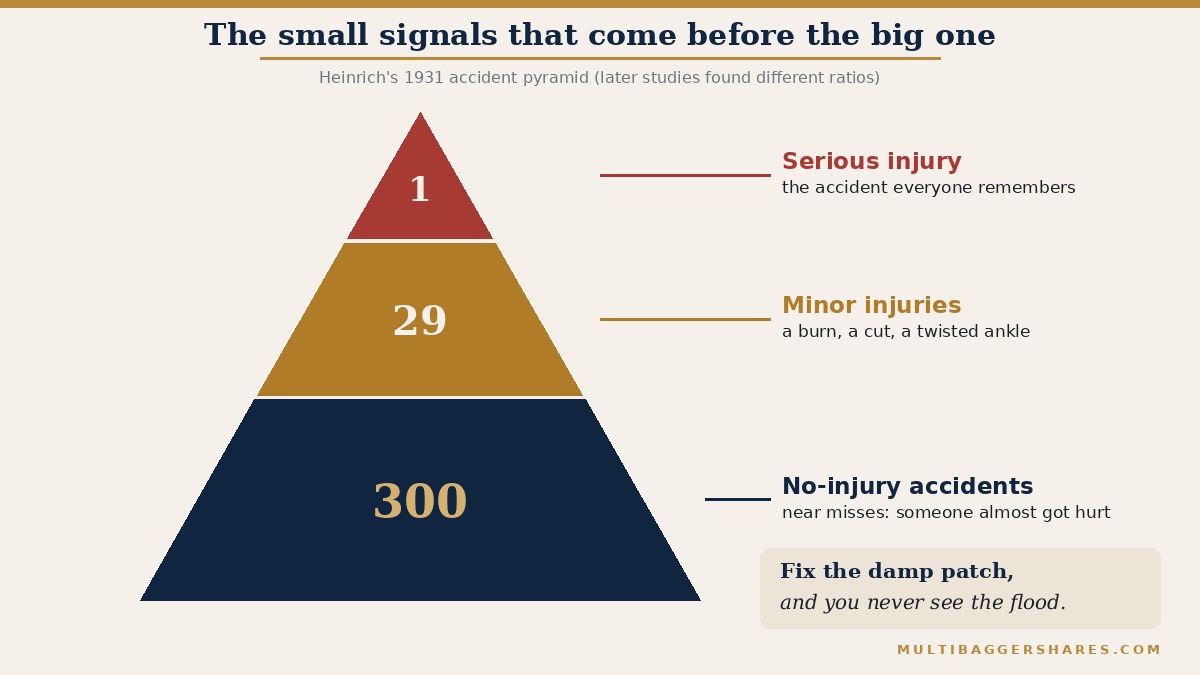
A word of care about those numbers. Heinrich’s original files were later lost, and other studies have found quite different ratios. Some experts also warn that the biggest disasters, such as an explosion or a gas leak, can grow from different causes than everyday slips. So a business must watch its rare, serious dangers on their own, not just count small cuts. But the core idea still holds: small warnings are cheap lessons, and a business that listens to them is learning while others are only hoping.
Third, it shows whether bad news can travel upwards. For a near miss to reach the notebook, a worker must feel safe saying, “I almost got hurt today.” In a business where people fear blame, small mistakes are hidden. And a business that hides small mistakes on the factory floor will often hide bigger ones in the office. An open safety habit is really a sign of honest reporting from the bottom to the top.
Fourth, accidents cost far more than they seem. An accident is like an iceberg. The part above water is the doctor’s bill. Below the water are the stopped line, the trained worker who leaves, the replacement who must be found and taught, the angry customer, the inspector’s visit and the damage to the business’s name. A business that cuts corners on safety is not saving money. It is borrowing it, at a very high rate.
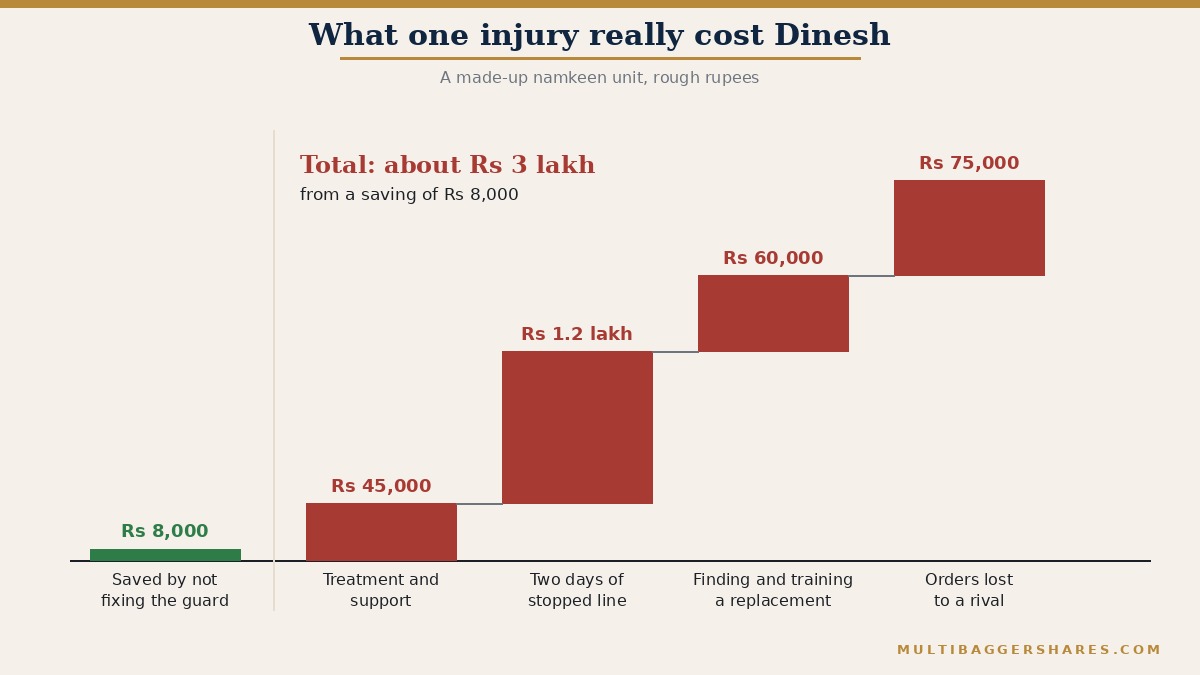
Fifth, it is hard to fake for long. A glossy annual report can be dressed up in a month. A factory floor cannot. Over five or ten years, a safety record is built from thousands of small daily choices. That makes it one of the more honest numbers a business shares, because no single clever decision can produce it.
A real example or two
The most famous story comes from America. In 1987 Paul O’Neill became chief executive of Alcoa, a large aluminium company. At his first meeting with investors, everyone expected him to talk about profits and costs. Instead, as Charles Duhigg tells it in his book The Power of Habit, O’Neill began with worker safety. He said: “I intend to make Alcoa the safest company in America. I intend to go for zero injuries.” Some investors were alarmed. One later said he told his clients to sell their shares at once. O’Neill also faced resistance from his own board in those early days.
O’Neill asked to be told within 24 hours of any injury, along with a plan to stop it happening again. To find the cause of an injury, managers had to understand exactly how each machine and each step worked, and to listen to workers who knew. Those same conversations threw up ideas for better quality and less waste. Over his years in charge, the rate of injuries that kept workers off the job fell from about 1.86 to about 0.2 for every 100 workers. Between 1986 and 2000, the company’s market value rose from about 3 billion dollars to about 27.5 billion dollars, and its yearly profit grew from about 200 million dollars to about 1.5 billion dollars.
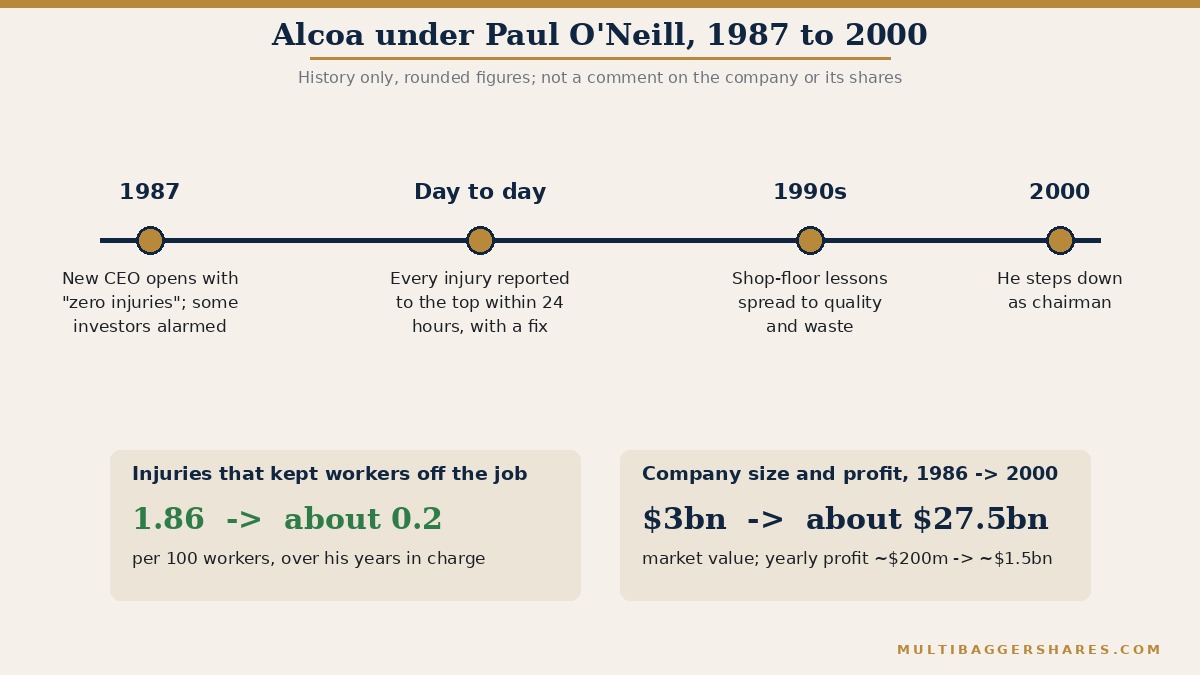
It would be wrong to say safety alone did all that. Aluminium prices, cost-cutting, purchases of other businesses and many other things played their part. But O’Neill chose safety as the one habit he could use to change every other habit, because nobody could argue against it, and because getting it right forced the whole company to get better at running itself.
The second story is much older. DuPont, the American chemicals company, began in 1802 making gunpowder beside a creek in Delaware. Gunpowder mills were deadly places. According to the company’s own history, the founder built his family home right inside the blast zone, so that he shared the danger with his workers, and in 1811 the company wrote down its first safety rules: no strangers in the powder yards, no matches or tobacco, no alcohol. Even so, a great explosion in March 1818 killed 34 people, as recorded by the Hagley Museum, which looks after the old mill site. Rules on paper were not enough. The company kept learning, and over the years safety became a whole system rather than a list. Its own history notes that between 1912 and 1927 its rate of major injuries fell from about 43 to under 4 for every million hours worked.
None of this is a comment on either company or its shares today. These are stories about how a habit of care, started at the top and carried out on the floor, shapes a business over many years.
How you can use it
In India, it has become much easier to find these numbers. Since the financial year 2022-23, the largest 1,000 listed companies by market value have had to publish a Business Responsibility and Sustainability Report, or BRSR (a yearly report on how a company treats its people, the environment and the wider world), usually inside the annual report. In the part about employees there is a small table, usually headed “details of safety related incidents”. It shows the LTIFR, the number of recordable injuries, the number of serious injuries and the number of deaths, separately for employees and for other workers, for this year and last year. Here are five simple checks.
1. Find the table. Open the BRSR and search for the words “safety related incidents”. Read the two years side by side. Is the business getting safer or not?
2. Look at deaths first, and at contract workers. One death is one too many, and a business that reports several every year has a deep problem. Check the row for workers as well as employees. In many Indian factories the most dangerous jobs are done by contract workers (people hired through an outside agency). A business that is safe only for its own staff is not truly safe.
3. Look at the trend, not one year. Pull out three or four old annual reports. A single good year can be luck. A steady fall over several years is the mark of a habit.
4. Listen to how management talks about it. Does the chairman’s letter mention safety at all? When something serious happened, did the company say plainly what went wrong and what it changed, or did it go quiet? Rukhsana’s notebook works because she reads it. Look for signs that someone at the top is reading theirs.
5. Be a little wary of perfection. A heavy factory with thousands of workers that reports zero injuries of any kind, year after year, may simply not be counting. A business that reports many near misses is often the safer one, because it means people feel free to speak up.
Two words of balance matter. First, compare like with like. A mine, a steel plant or a construction company will always carry more risk than a software firm, so judge a business against others in the same line of work. Second, a good safety record is one clue, not the whole answer. A very safe business can still make a product nobody wants. Use this check alongside the other lessons on what makes a business good.
This is a way to judge the quality and character of a business, not a way to predict what any share price will do. Dinesh and Rukhsana fried the same namkeen in the same oil. The difference was a notebook on a hook, and an owner who read it every Friday. That small habit told you more about her business than any brochure ever could.
Key takeaways
- How safely a business runs is one of the clearest windows into how well it runs.
- The habits that prevent injuries, like maintenance, training and clear steps, also cut waste and defects.
- Small warnings come before big accidents; a business that records and fixes near misses is learning early.
- In India, check the BRSR safety table: deaths, contract workers, the trend over years, and how management speaks.
- This is a way to judge business quality. It is education only, not a view on any company or share.
— Manish Goel · multibaggershares.com
Manish Goel is a Chartered Accountant and Principal Officer of Multibagger Securities Research & Advisory Pvt. Ltd. (MSRAPL), a SEBI-registered Investment Adviser, Registration No. INA100007736. This content is published by MSRAPL for education only and is not personalized investment advice.
Disclaimer: This article is published by multibaggershares.com for education and general information only. It is not investment advice, investment research, or a recommendation to buy, sell or hold any security. Any companies named are discussed only as illustrative examples. Markets carry risk; please do your own research or consult a qualified professional before making any investment decision. |