Blogs
October 10, 2026
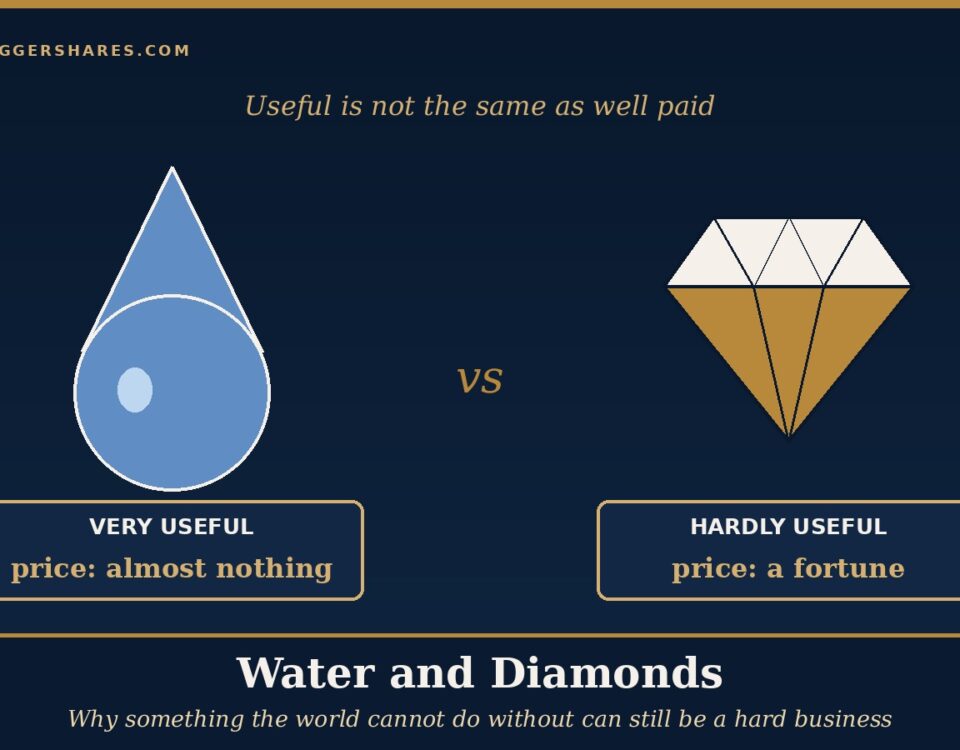
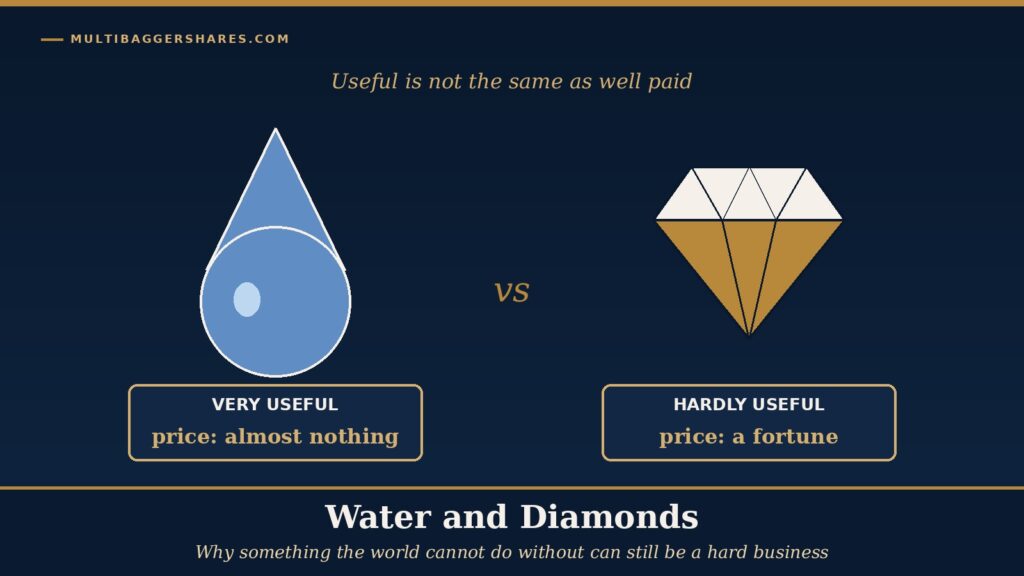
Water keeps us alive, yet it sells for almost nothing. A diamond keeps nobody alive, yet it sells for a fortune. Here is what that old puzzle teaches us about telling a useful business from a profitable one.
October 9, 2026
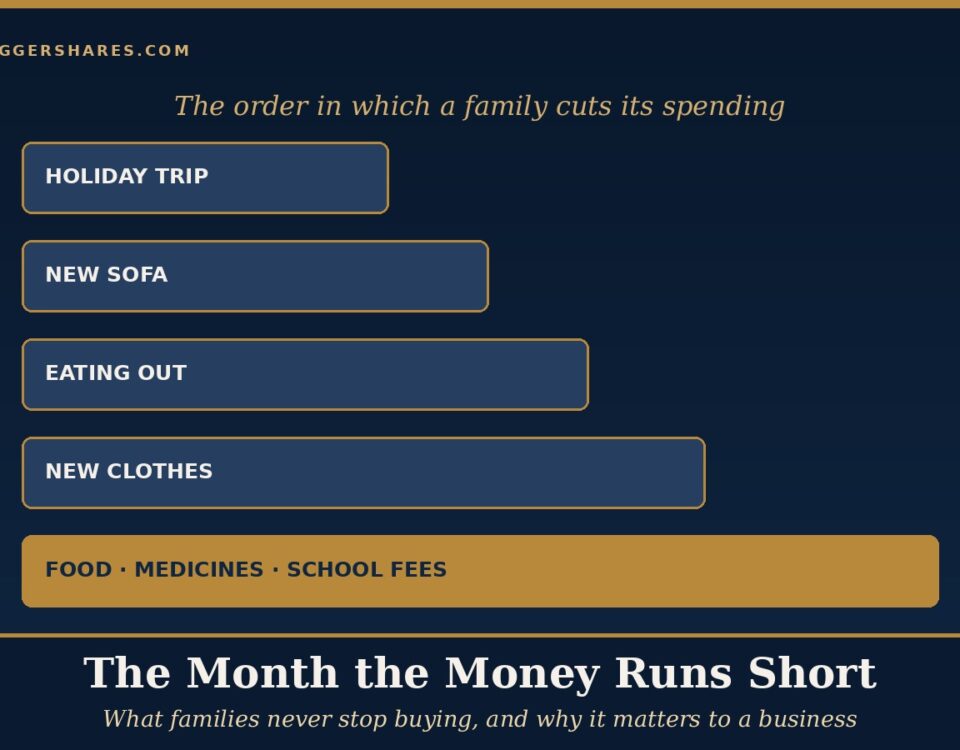
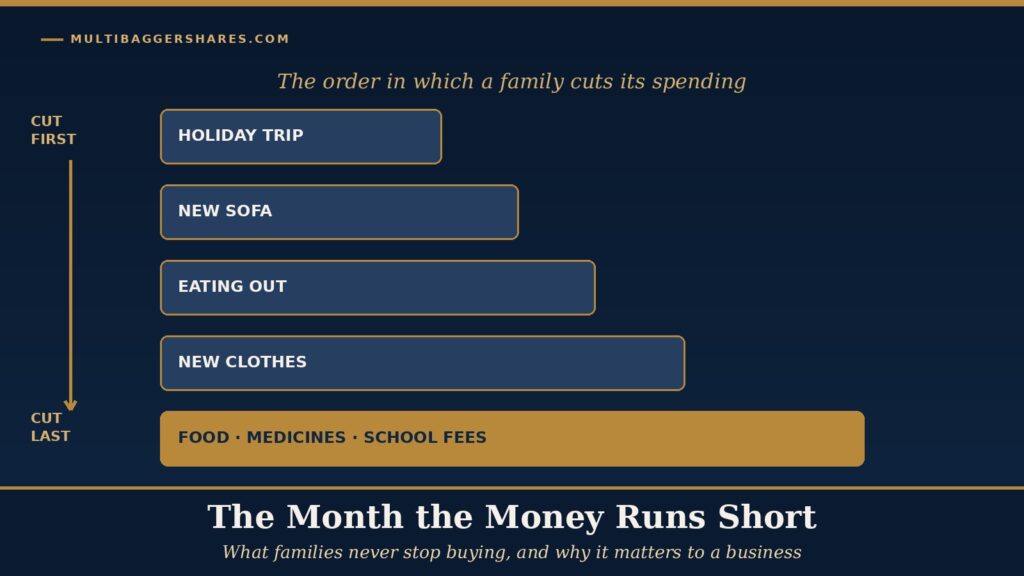
When money runs short, a family stops buying some things at once and other things never. A business that sells the second kind has steadier sales. Here is how to spot it, and why it is only the first step.
October 8, 2026
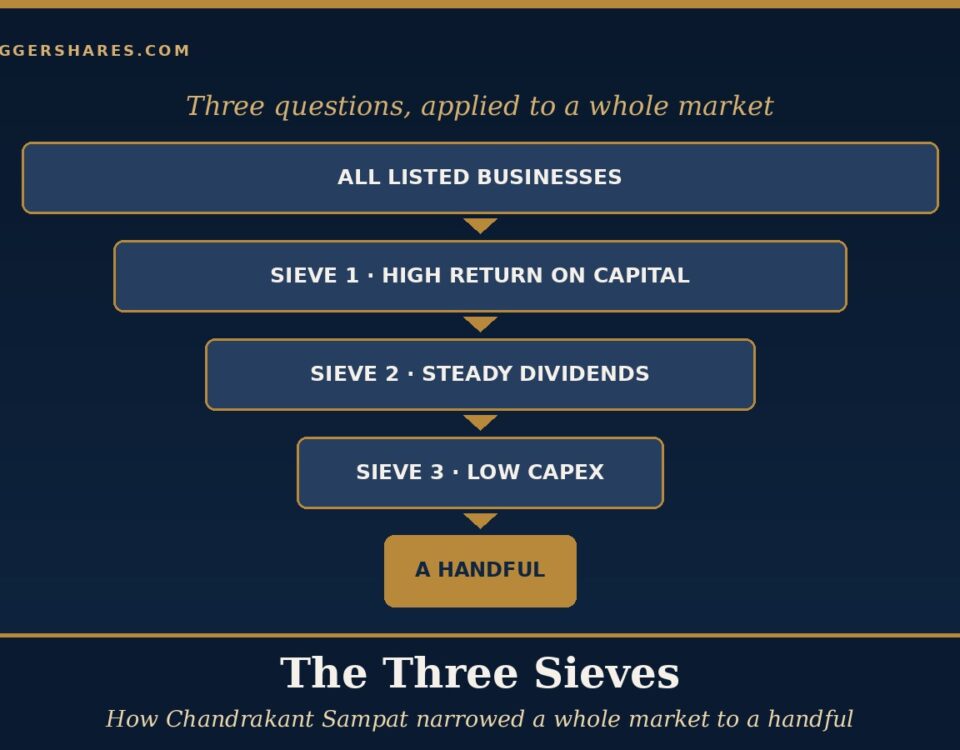
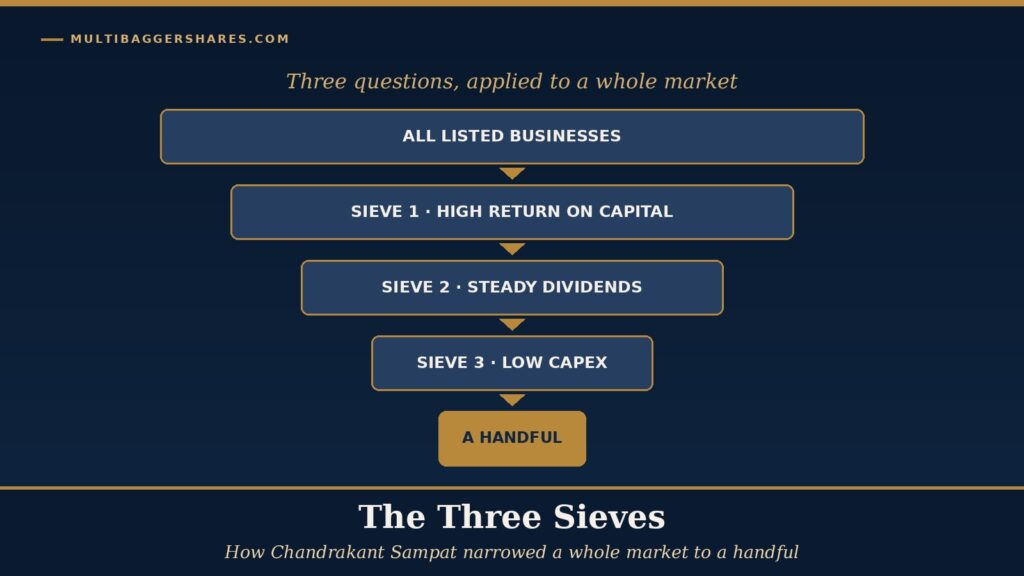
A grandmother sifts flour through a sieve so that only the fine part passes. Chandrakant Sampat did the same with the stock market, using three plain questions. Here is how they work, and why they still teach us something.
October 7, 2026
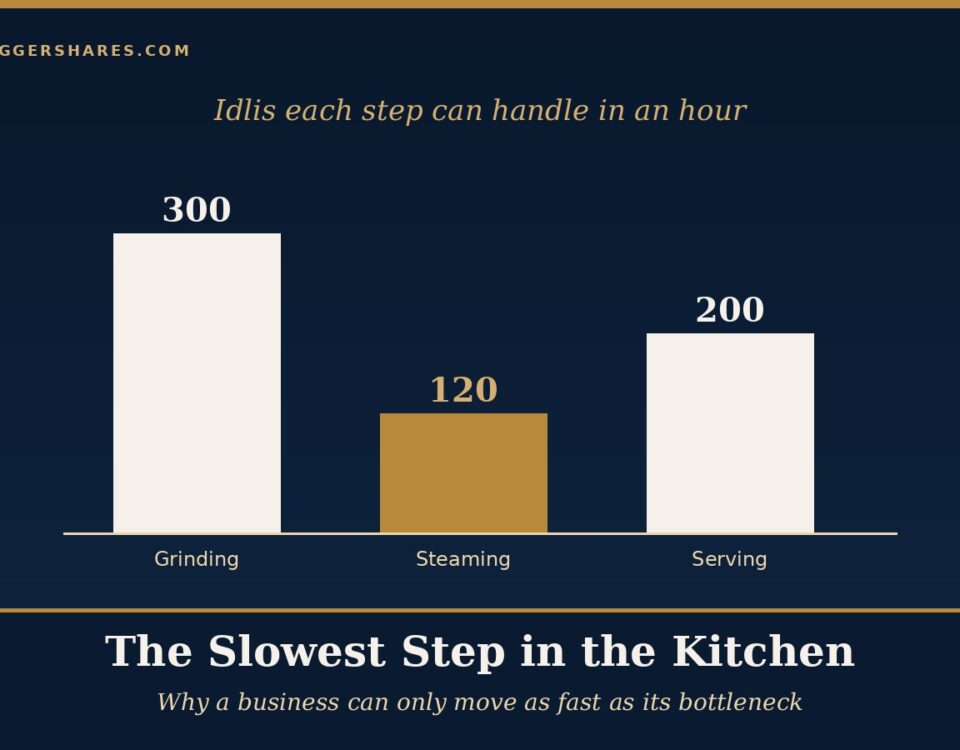
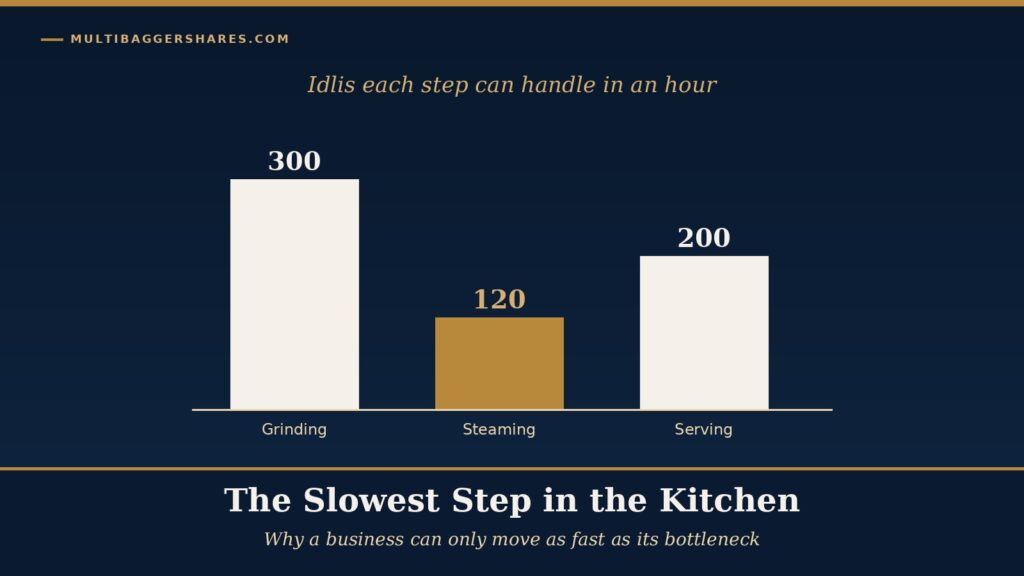
Every business is a chain of steps, and the whole chain can only run as fast as its slowest one. Knowing where that step is, and what it costs to widen it, tells you a great deal about the quality of the business.